Retail and Restaurant Chain Roofing in Santa Maria, CA
Schedule a chain roof review
Share the site list, store hours, delivery periods, and reported leak zones. We will inspect each location, document its assembly and repair boundary, and provide work windows that account for customer and staff access.
Request a roof assessment or call 555-555-5555.
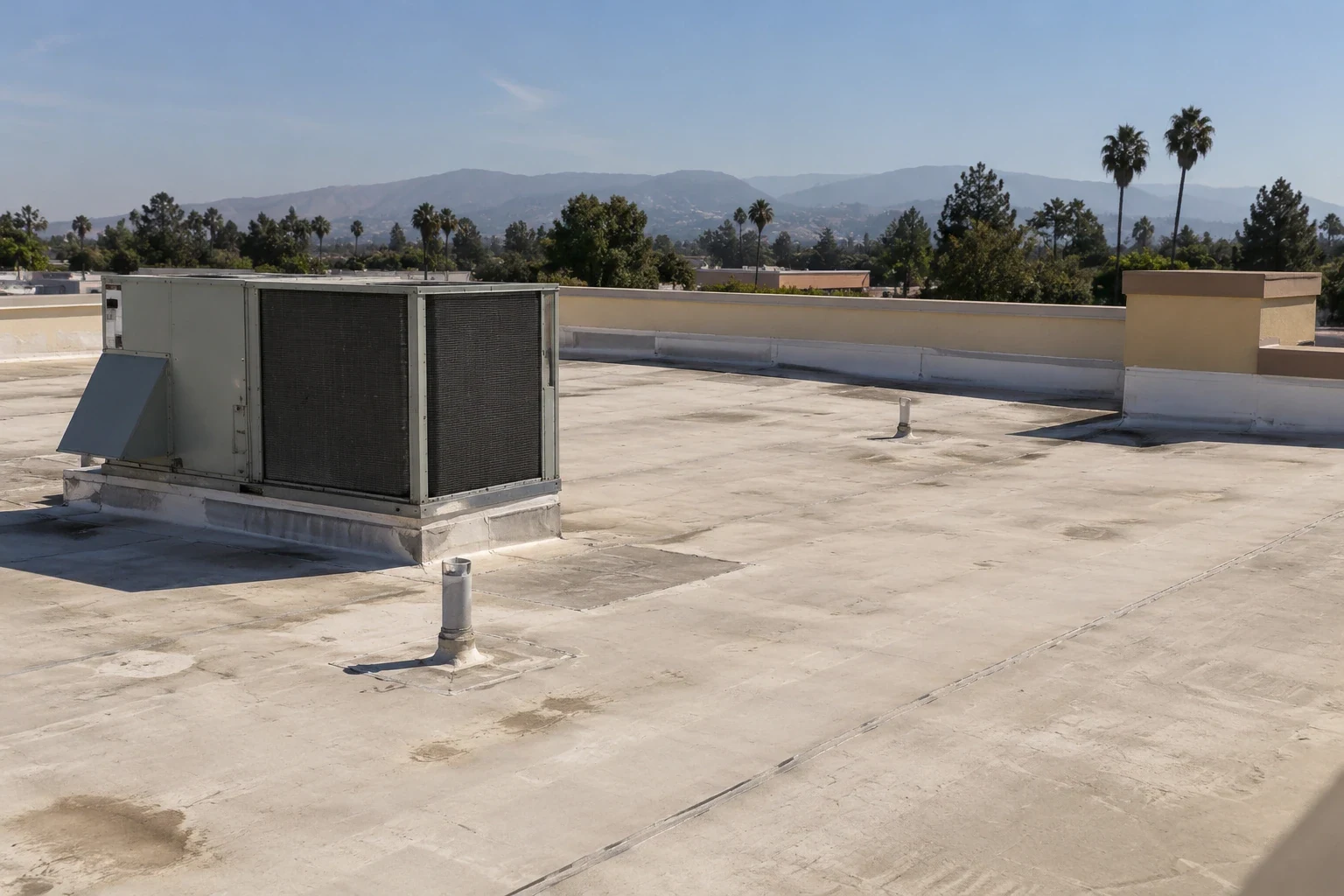


A grease exhaust curb with a loose corner can send water toward a dining room while customers are still arriving. In Santa Maria, CA, we inspect the curb, membrane laps, drain path, and roof access before deciding what section needs repair. Betteravia Retail Corridor includes shopping destinations and retail or office centers. Enos Ranchos planning allows regional and warehouse retail, office, auto-related commercial, park, school, and residential uses. Each location has its own roof and operating schedule, which we confirm before setting work.
For a chain facilities team, the service window at one store may differ from the next. We identify opening hours, delivery periods, customer routes, kitchen operations, and any equipment service that affects roof access. A multi-location roof program can keep the same reporting fields across sites while preserving each building's repair boundary, photos, access plan, and next action.
Inspection: check the exhaust and water path
At a restaurant, we look closely at exhaust curbs, duct penetrations, flashing corners, and nearby seams where heat, grease, or maintenance traffic may affect a detail. At a retail building, the inspection may focus on long seams, skylights, drains, and roof transitions near storefronts. We trace the reported interior area and record the specific conditions found. A commercial roof inspection maps the affected zone so the chain can compare records without assuming each roof uses the same assembly.
Santa Maria's airport station reports a normal of 13.32 inches of annual precipitation for 1991-2020. We inspect drains, scuppers, low points, and overflow routes at the property, then note debris or ponding that changes the repair. If a large roof area continues to hold water beyond the 48-hour point after a storm, the City calls for drainage analysis and corrective work. A drainage correction should be identified separately from a curb or membrane patch.
Building context: keep customer routes clear
Before crews stage material, we identify the public entrance, service door, delivery path, and the area below the roof section. If a test opening or material removal is needed, the scope names the affected room and the protection required before the roof is opened. Retail managers can direct customer traffic around a defined work area, while restaurant staff can plan around kitchen access and food-service hours. A phased reroof sequence can close one section at a time and establish a dry-in point for each shift.
We confirm current store operations and roof access with the property manager before setting delivery and work windows. At each chain location, we verify the installed system and observed condition before applying the portfolio scope. We inspect the building's actual sheet, curbs, drains, and access points. A roof walk in the Betteravia corridor can be arranged around delivery and customer hours for the property under review.
Repair options: make each store scope comparable
A repair may be limited to a seam, curb, edge, or drain when the surrounding membrane and substrate can accept the specified detail. We mark that area and note nearby items checked. The report identifies the material at the lap or curb, the preparation completed, and the surrounding edge that remains outside the repair. Store staff can keep those photographs with the service record and route them to the regional facilities contact if the same room reports water again. If several reports recur at one location, we compare their roof zones with moisture evidence, attachment, and drainage before recommending broader work. The chain can receive a site-specific repair scope and a separate replacement assessment instead of a regional assumption applied to every store.
Emergency calls are answered every hour, weekends and holidays included. We first reduce active water entry, protect rooms and stock, and photograph any temporary measure. Once the source is accessible and the substrate can be checked, we prepare the permanent repair boundary. Drain and scupper work may address an outlet condition, while curb and equipment flashing work can restore a penetration detail after service.
Timing: fit the work between service periods
Replacing a roof covering triggers a Santa Maria permit and pre-roof inspection; written authorization is needed before application. Reviewers may examine structural support, deck, water flow, current-layer attachment, damp insulation, and fire-retardant safeguards. We include that approval hold before installation. For a chain, the date also needs to account for store hours, deliveries, kitchen exhaust operations, and any customer-facing entrance affected by staging.
Fog can change when a surface is ready for cleaning, bonding, or coating. In NOAA's 42-year KSMX series, the annual mean for heavy-fog days is 62.4. At the store, the crew checks the surface and substrate before starting the specified preparation. We inspect the actual surface and substrate before applying the specified system. A coating project includes preparation and cure timing so the store can plan access around the roof work rather than reopen below a surface that is still being prepared.
Maintenance: share the record across locations
After each visit, the facilities file should include photographs, the roof-zone map, repairs completed, drain observations, material details, and open questions. Regional staff can compare those items across locations while keeping each building's conditions distinct. A roof condition report helps identify which store needs immediate repair, which needs testing, and which can be reviewed during the next planned maintenance period.
Restaurant operators can coordinate the same records with hotel facilities teams where kitchen and guest areas require different access plans. A property manager can use the map with multi-tenant retail assets when common access or shared drainage affects the work. We check drains, exposed laps, curbs, and service routes, then note which details should be revisited after HVAC or kitchen-equipment work changes roof traffic. For stores sharing a parcel or service lane, the visit record can note which entrance serves the affected tenant and whether deliveries need a temporary route adjustment. That keeps the roof scope connected to the property manager and store contact who can release access on the workday.
Commercial Roofing Questions
Can repairs happen before a store opens?
A pre-opening window can suit some repairs if the roof access, surface preparation, and dry-in fit within the available hours. We confirm the work detail, noise, material movement, and interior protection first. If the repair needs more time, we can define a staged section and coordinate an alternate route with the store manager.
What roof details need attention around kitchen exhaust?
Check the curb corners, membrane turn, flashing, nearby seams, and any area affected by equipment service. We inspect the actual assembly and identify whether grease or surface contamination changes preparation. The repair scope states how the penetration will be restored and what roof access the kitchen trade needs later.
How do we prioritize a group of stores with reported leaks?
Rank active water entry, interior exposure, drain concerns, and the condition evidence at each location. We map reports to roof zones and note which need an emergency visit, a scheduled repair, or testing before a capital decision. The chain can then schedule visits around service hours using comparable records. A regional contact can identify locations with recurring drain restrictions, recently moved rooftop units, or a customer area that needs advance notice. Those details help set visit priority and avoid sending a crew without the access needed to inspect the reported zone.
What does Santa Maria require before replacement work?
Plan for the City's permit step and inspection of the exposed roof before new material goes down. Santa Maria requires written approval before application, with review of deck, drainage, attachment, insulation moisture, and fire-retardant conditions. We place that hold in the work calendar with surface preparation and daily dry-in.
Related
Plan the next roof visit
Tell us about the building and what you are seeing on the roof. Request a roof assessment and we will set up a time to look at it.