
TPO Commercial Roofing in Santa Maria, CA
Review a TPO roof condition
Arrange roof access and share leak locations or prior repair records. We will inspect welds, flashings and drainage, then provide a repair or replacement scope tied to the observed assembly.
Request a roof assessment or call 555-555-5555.
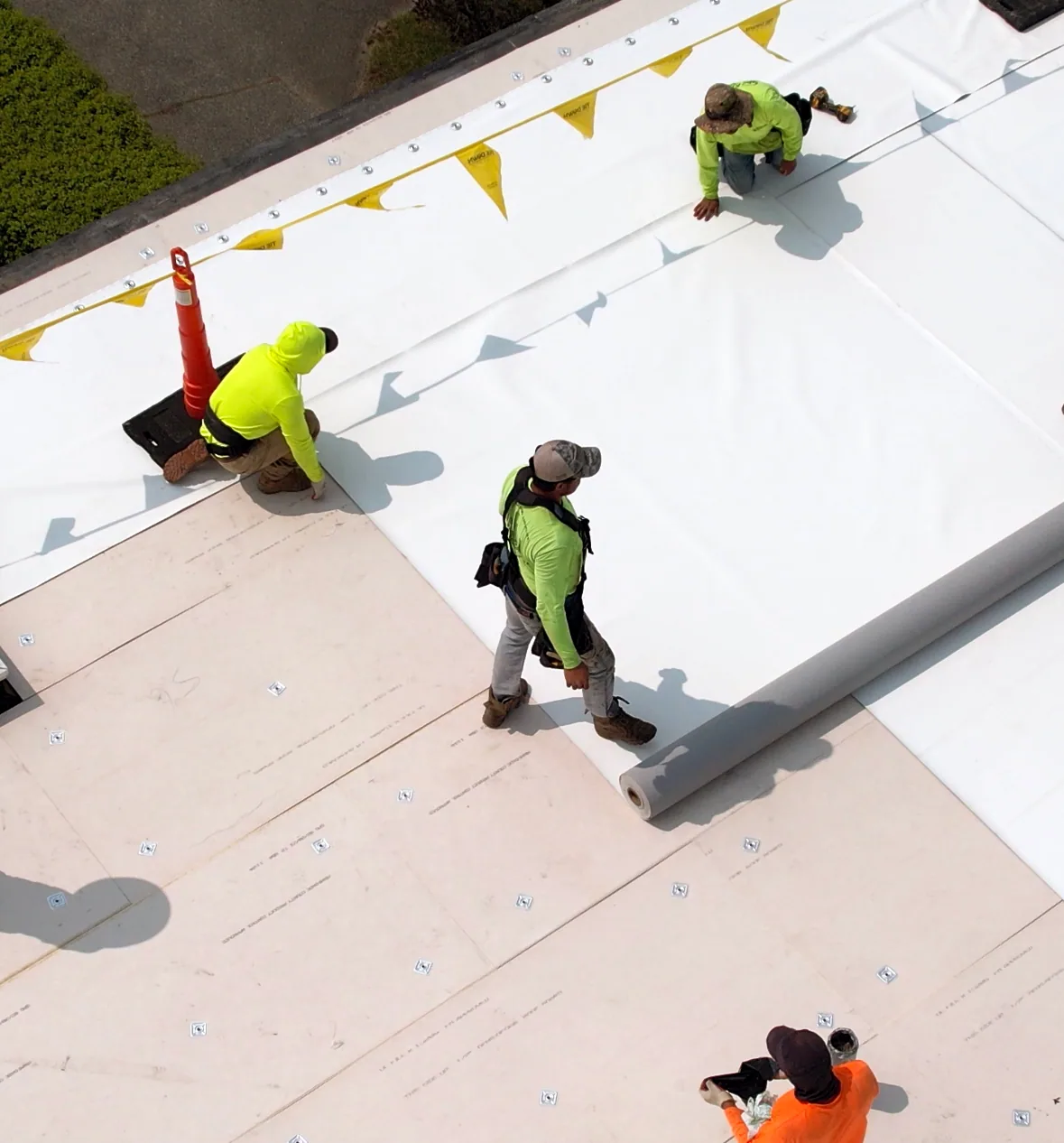
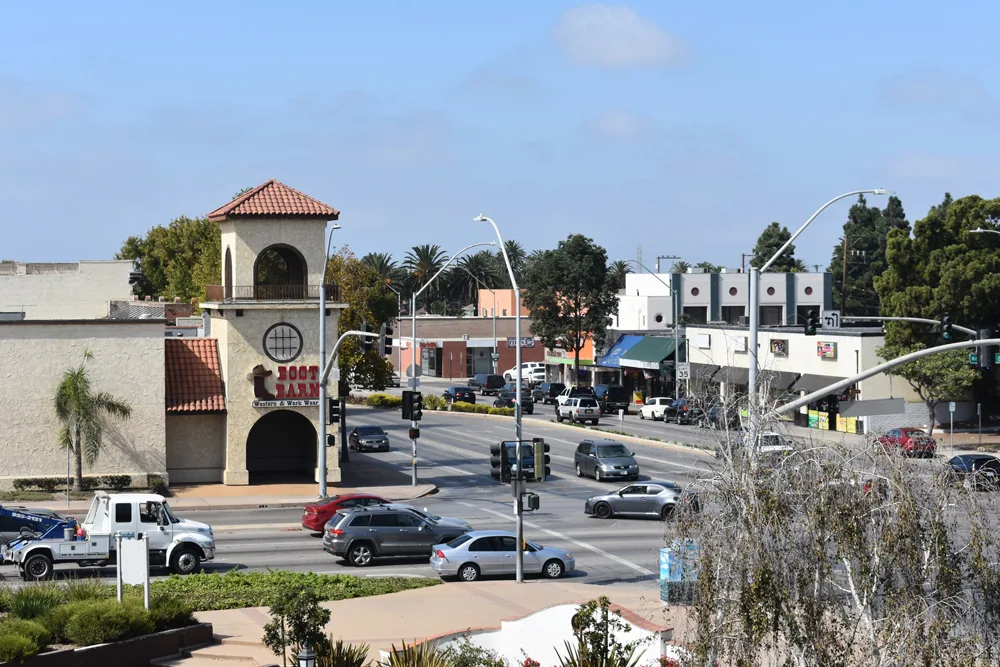
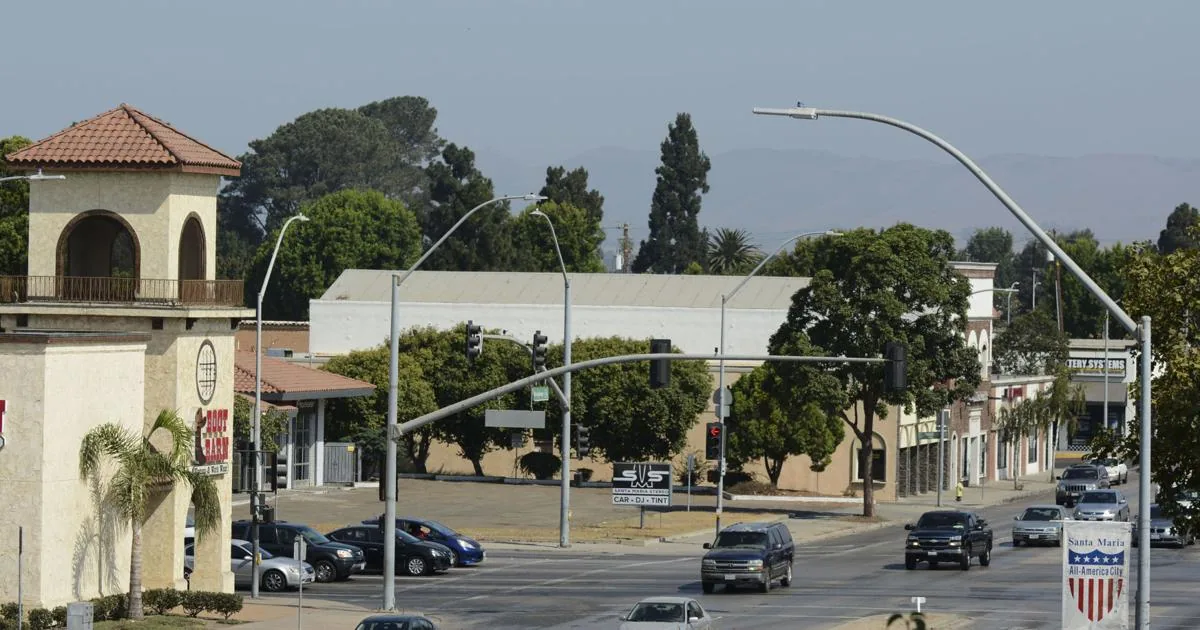
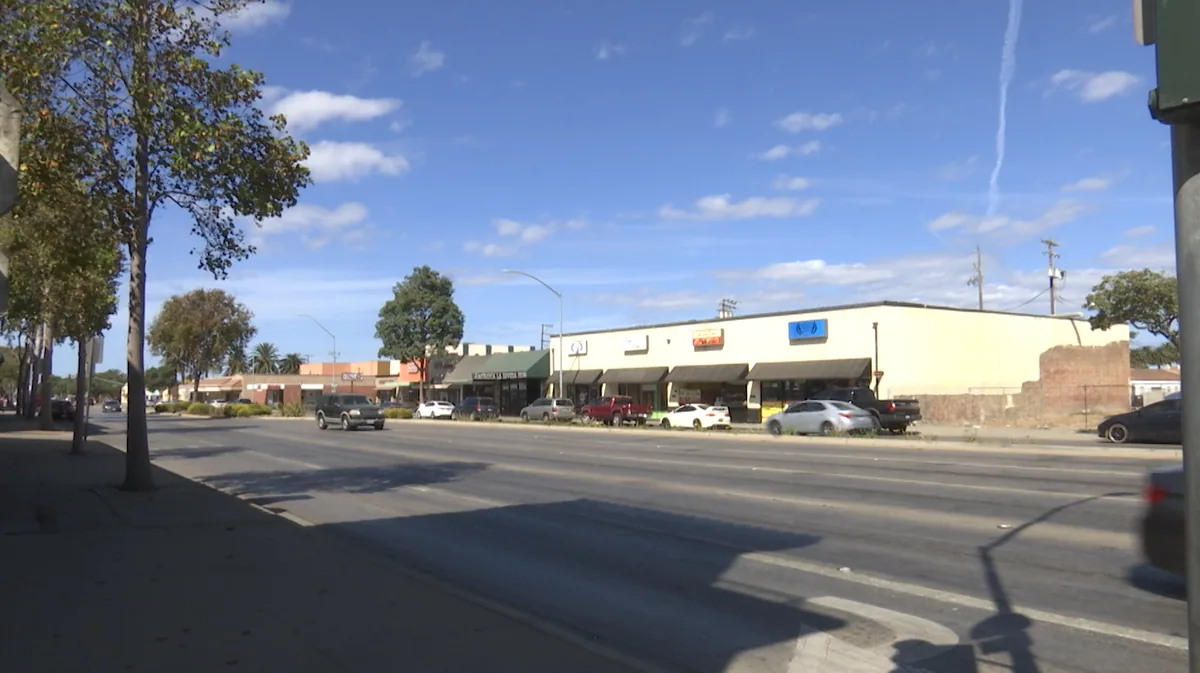
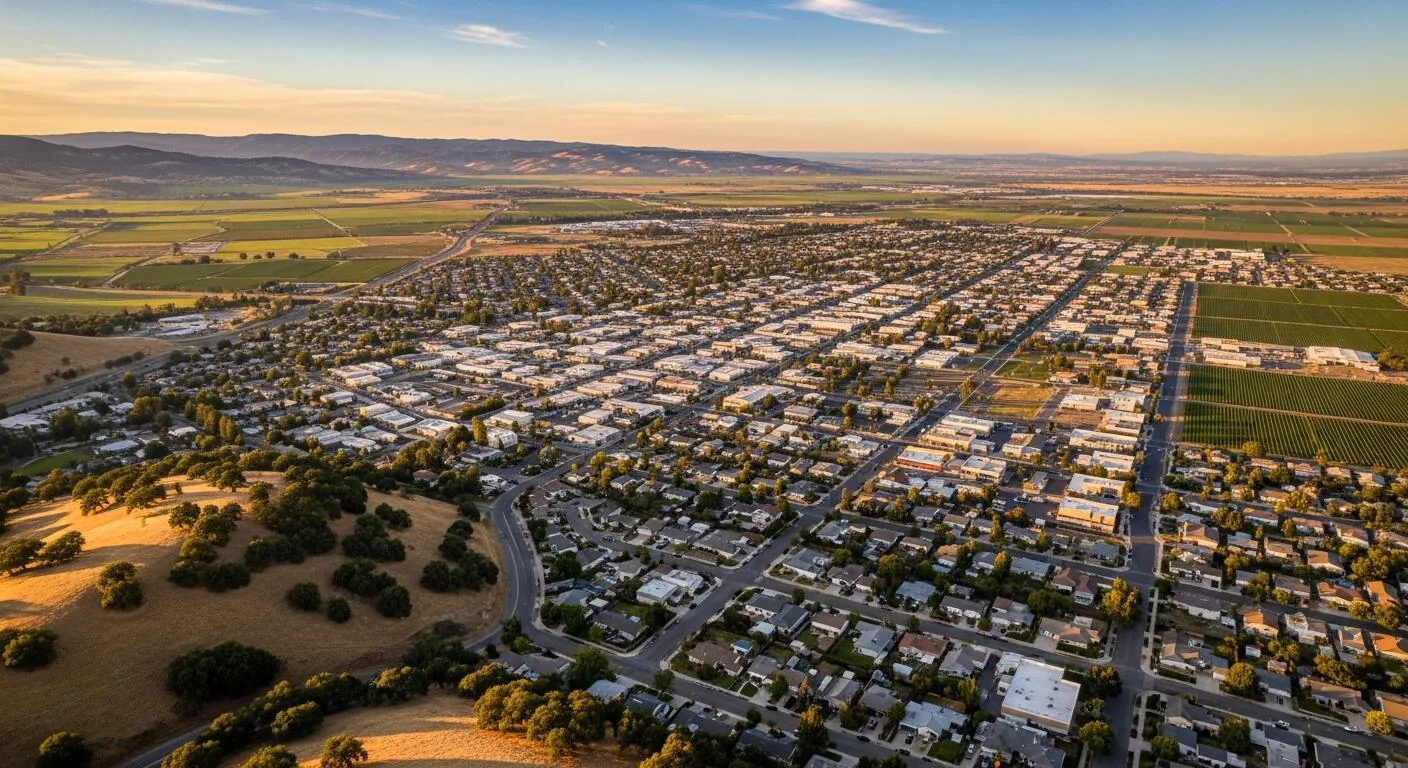
A TPO seam is a welded joint, not a strip of tape. In Santa Maria, CA, we check the weld, sheet movement, flashing terminations and drainage before deciding whether a repair or replacement fits the roof. At the Santa Maria Airport Business Park, the plan anticipates light manufacturing, laboratories, technical development and office uses. North Broadway is a commercial corridor with its own building mix. For each project, we inspect the membrane, seams and roof transitions before setting the repair boundary.
Thermoplastic polyolefin is a single-ply membrane often selected for low-slope roofs. Its seams are heat-welded, and the system depends on compatible flashing, secure attachment and a substrate suited to the specified assembly. We record the membrane thickness when available, photograph the field sheet and mark the repair boundary. Any area needing closer inspection remains a separate item before work is priced.
Read welds, laps and transitions together
A seam can look closed at the edge and still have a weak weld farther along its length. We probe accessible seam edges, look for fishmouths, wrinkles, contamination and movement, then check how the field ties into walls, curbs and drains. A good repair needs sound membrane beyond the visible defect. We record the sheet direction and nearest stable boundary so the crew can make a weld that belongs to the existing assembly.
At penetrations, the membrane must turn up and terminate without leaving a path behind the flashing. Corners, conduit clusters and equipment curbs need shaped pieces that fit the geometry. If a curb is moving or a pipe boot is split, we separate that issue from a field seam repair. A condition inspection can map the surrounding details, while a repair visit addresses the confirmed defect.
Keep the water route clear
Drain bowls, scuppers and overflow paths tell us whether the membrane is shedding water as intended. We look for debris, displaced strainers, loose clamping rings, open seams around drains and low areas that hold water after rain. Santa Maria's code calls for drainage analysis and corrective action where extensive ponding remains more than 48 hours after rainfall. We document that condition and keep drainage work distinct from a membrane patch when slope or outlet capacity is involved. A loose clamping ring can let water pass beneath the sheet while nearby field welds remain intact, so we inspect that junction before assigning a leak to the seam.
The Santa Maria airport station's 1991 to 2020 normal is 13.32 inches of annual precipitation. After rain, we check each outlet, flashing and overflow route to see where runoff moves. A drain and scupper scope can address an outlet assembly, while a broader leak investigation traces water through the roof layers. We photograph the bowl, membrane termination and overflow path so the manager can separate debris removal from a damaged roof detail.
Prepare the substrate before welding
New TPO work begins with a review of the existing roof and specified attachment. Depending on the assembly, a system may be mechanically attached, adhered or installed over approved insulation and cover board. We confirm that the substrate is secure, dry and suited to the selected method. Wet insulation, weak deck areas or unapproved layers need correction before a new sheet can bridge them; otherwise the membrane can conceal a condition that affects performance.
The crew records each test weld and the equipment setting used for that seam, then checks the finished joint after it cools. If a test strip does not meet the specified result, the setup is corrected before production welding continues. We also check the starting and stopping edge of the repair, since a sound field seam can still leak where a new detail meets older flashing. This creates a traceable quality check on the work itself, not just a general visual review at closeout.
Where a recover is permitted and appropriate, the scope names what stays and what is removed. Sheets are positioned, attached and welded to system requirements, with test welds used to confirm setup. We form corners, flash curbs and tie edges into the specified metal. A PVC assembly or EPDM assembly may be compared when compatibility or operating demands point elsewhere.
Coordinate review and roof access
A TPO replacement enters Santa Maria's permit process before installation. City staff inspect the roof and issue written clearance for the new covering. Their review can examine load support, deck, water movement, current attachment, wet insulation and fire-retardant provisions. We place that hold before the crew begins laying sheet and coordinate the necessary access. Downtown Santa Maria and the Airport Business Park are distinct planning areas, but property-specific permit and access conditions still control the work.
For each building, we identify staging, rooftop equipment, tenant routes and sections that must stay protected. A Downtown Santa Maria roof visit records actual access and drainage conditions, while a phased reroof plan can sequence removal and dry-in. Our roof map marks obstructed sections and identifies where access must change before a later inspection can be complete.
Track repairs and future inspections
After installation, seam checks and drain maintenance help preserve a clear history of the assembly. We record repair locations by roof zone, photograph welds and terminations, and note access limits that may affect the next visit. A new membrane is not maintenance-free; foot traffic, equipment work and later penetrations can disturb details. The owner can keep the closeout map with mechanical and permit records for future coordination.
After rainfall, a maintenance walk checks for debris at drains and movement at transitions. We compare those observations with closeout photos, note any change in the membrane and mark the roof zones that need work. That record helps the property manager schedule repairs while preserving clear access for mechanical service.
When a leak appears, we trace it rather than assume the nearest seam is the origin. Water can travel beneath the membrane before showing inside, so the report identifies what we inspected and what remains unresolved. A condition report can support planning, and preventive maintenance can revisit drains, seams and flashings at intervals selected for the building. If coating is considered, we check compatibility first and record any work that could affect a membrane seam.
Commercial Roofing Questions
Which signs at a TPO weld change the repair scope?
A lifted edge, an incomplete weld or contamination at the lap changes the repair boundary. We test accessible sections, prepare sound sheet and complete a compatible weld. If the report comes from an interior stain, we trace the route first because the nearest seam may not be the entry point.
Can new TPO go over the current roof?
A recover depends on the existing assembly, moisture, attachment, deck condition, code and system requirements. We list the assembly observations and the test cuts needed to price a recover responsibly. Wet insulation or unstable layers must be addressed in the scope.
What affects the timeline for a TPO reroof?
Tear-off depth, substrate repairs, weather, roof access, equipment curbs, inspection holds and attachment method influence the sequence. We define the daily dry-in boundary and confirm permit and pre-roof review steps before starting a new covering.
Can TPO be repaired around active rooftop equipment?
We inspect the curb and membrane transition, then coordinate any shutdown or lift with the mechanical contact. The roofing crew repairs flashing and sheet details, while equipment connections remain in the mechanical scope. The work plan identifies that boundary before the roof is opened.
Plan the next roof visit
Tell us about the building and what you are seeing on the roof. Request a roof assessment and we will set up a time to look at it.