
Commercial Roof Leak Repair in Santa Maria, CA
Trace the water path
Share the affected room, leak timing and any prior repair photos. We will inspect the roof detail above, document the likely route and price a repair that names its limits and follow-up.
Request a roof assessment or call 555-555-5555.
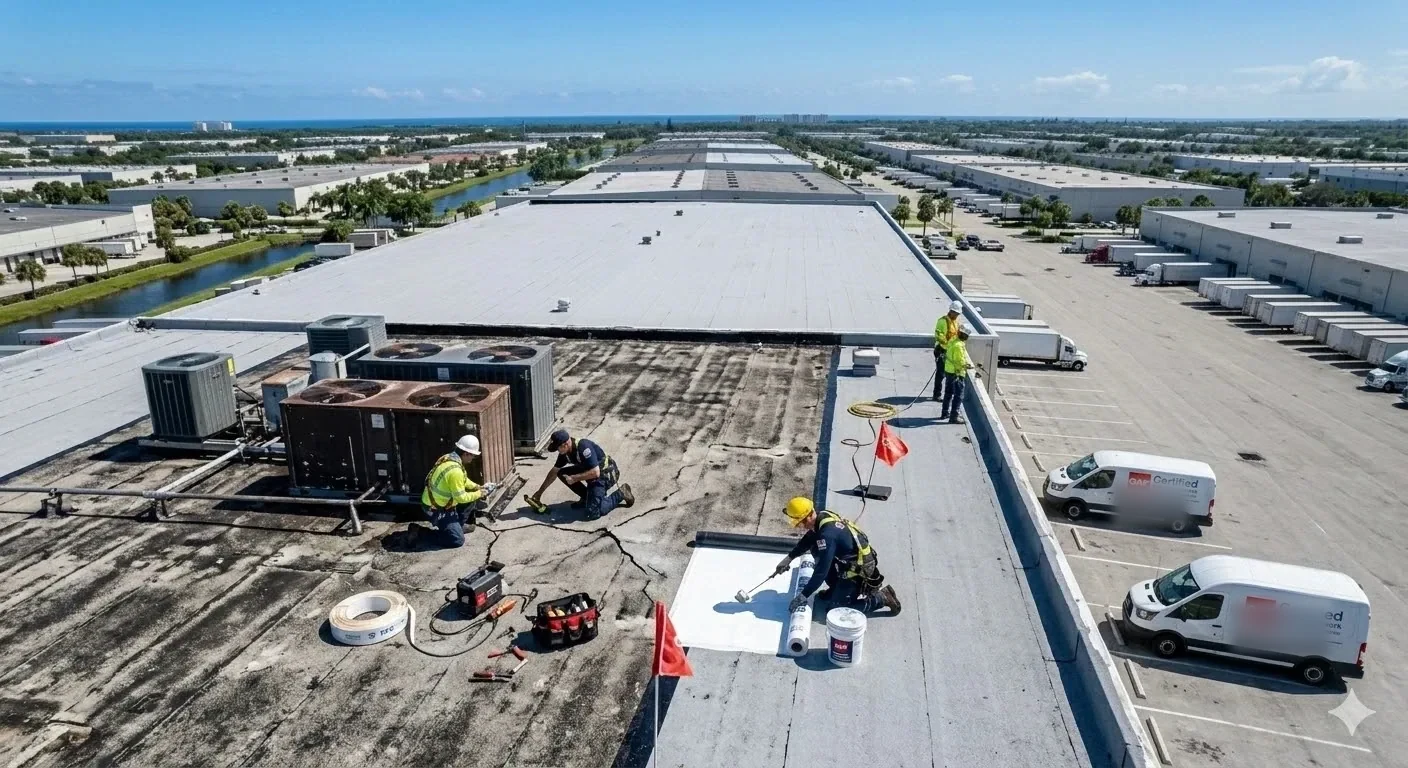
Water can travel below a membrane from a drain or wall edge before a stain appears indoors. We trace laps, curbs and prior repairs against the room symptom, then test the most likely detail before setting a boundary. The ceiling mark is a clue, not the map; access follows the suspected path.
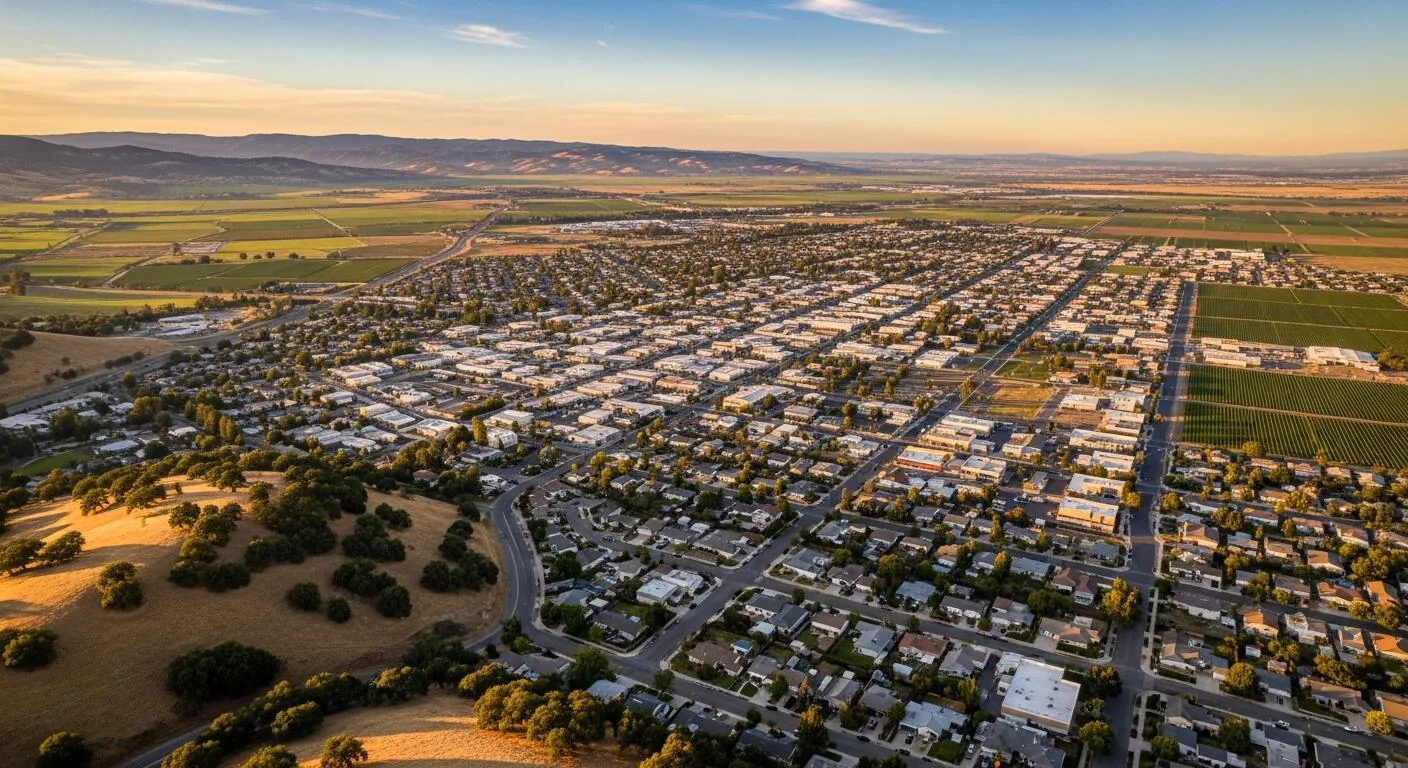
Santa Maria's KSMX station has a 13.32-inch annual precipitation normal for 1991-2020. During a leak visit, we record roof and interior clues so the manager can authorize a defined repair or a test opening when it could clarify the path.
Diagnosis: start above the symptom
At intake we establish the first visible time, recent rainfall, any rooftop trade activity, affected rooms and prior repairs at that location. On the roof, we inspect field seams, penetrations, curbs, parapets, drains and metal terminations within the likely path. Inside, we record staining, active drips and areas that need protection.
Water may cross a deck or insulation joint before reaching the room, so we follow the likely route rather than patching the roof area directly above the stain. The findings become a short map, with confirmed defects separated from suspected routes. We label each condition as confirmed, likely or still unresolved. A confirmed open seam can be photographed and repaired directly.
A stain that appears after rain but has no visible roof opening may need a moisture scan or a controlled test area. A drip near an HVAC curb can originate at the curb, a nearby conduit, or a membrane lap uphill from it. We trace those possibilities on a simple roof sketch, then tell the manager what the first repair will prove and what it will leave unknown. Sealant applied before locating the entry can hide a defect without closing the path.
Exposure: interpret rainfall and fog carefully
The Santa Maria KSMX station's listed 42-year period averages 62.4 heavy-fog days each year. Fog can leave a roof surface damp during early work, affecting cleaning and adhesion. We check the surface at repair time and follow the selected membrane or sealant requirements.
Before laying out a work area, we confirm access restrictions with building management and identify entrances, occupied rooms, and tenant routes.
Method: match the repair to the system
A single-ply membrane usually needs a clean, dry, compatible patch with a continuous welded or bonded perimeter. Modified bitumen may call for reinforcement and a compatible flashing detail. Metal requires attention to laps, fasteners, sealant and movement. The transition remains a separate detail if its bond or support is compromised.
We identify the system before cutting or applying material, then prepare beyond the damaged edge so the new work bonds to sound surface. A cover of mastic over loose or contaminated material is not a durable repair. The commercial repair scope states the preparation, material and tie-in that will be performed, along with any work that requires a separate approval.
Drain path: find where water leaves
We inspect nearby drains, scuppers and gutters because a blockage or low point can keep water at a seam after the leak is sealed. Santa Maria's code says extensive ponding that persists more than 48 hours after rain requires drainage analysis and corrective measures. When a repeated ceiling leak sits beside a low drain, the roof report should separate a membrane repair from any slope or outlet work.
Our drain and scupper corrections address the transition and outlet details as part of an approved scope. We photograph water paths and confirm that temporary covers will not block an outlet while the repair cures. After the water path is mapped, we protect the interior and keep the roof drainable during the repair.
A temporary cover should not trap runoff upslope or send it into another opening. We check the nearest low point, check outlet condition and remove debris generated by the work. Where several repairs overlap, we mark each repair boundary and photograph the transition so future crews can see which membrane is original and which is new. The West Stowell industrial-area roof review is a broad location reference; the actual leak plan remains specific to the building and its drainage layout.
Access: plan around the building below
Active leak response can require a temporary interior catch, moving stock or equipment, or protecting a room before roof work starts. We coordinate those steps with the property manager, then agree on ladder placement, staging and the first roof area to open. Property operations determine access and shutdown needs. The manager identifies which activities cannot pause and which hazards or escort rules apply.
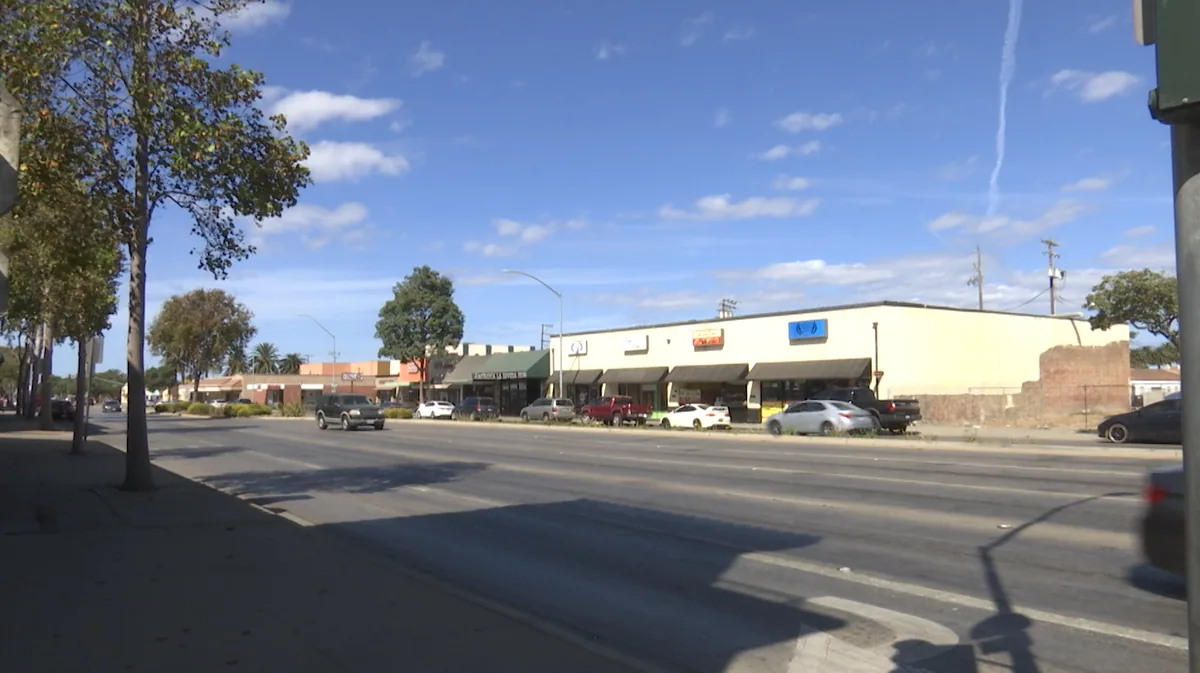
Access and shutdown needs vary by use, so the property manager identifies the building's actual operation. Highway 101 and Highway 135/Broadway connect the airport and central Santa Maria toward Highway 1. We confirm delivery and parking conditions with the property contact before mobilization. Access differs by building.
Documentation: close the leak record
After repair, we photograph the finished patch and surrounding detail, confirm the weld or bond, and record the weather and surface conditions. We also mark what remains unresolved, such as wet insulation outside a test area or a second leak on another roof zone. A maintenance record can then compare future calls against the same roof map instead of repeating the original search.
A full condition inspection is the next step when there are several unrelated symptoms; a perimeter review helps where water tracks from parapets or coping. The roof condition report pairs each image with a grid location, then assigns any unresolved question to a specific inspection or sample opening. That keeps follow-up specific.
We also describe whether the repair can be reached from the existing roof hatch, whether a lift is required, and which rooms need temporary protection. Those details affect the return visit and help management prepare tenants without blocking the entire building. If more than one roof elevation is involved, each work area receives its own reference so the report does not blend separate entry points into one condition.
Decision: know when one patch is not enough
Several recurring seam repairs, visible deck movement or moisture readings across zones can point beyond a single patch. We compare an immediate repair, a targeted opening and a broader roof-life review on their mapped areas, limits and budget implications. That comparison gives ownership a repair, testing or replacement option tied to observed conditions.
Before applying a new roof covering, the City requires a permit and a pre-roof inspection with written approval. Leak repair does not automatically mean full replacement, but a future covering must follow the required review steps. Once water is kept out, the replacement assessment can address any wider roof-life question.
Commercial Roofing Questions
Can you find the leak without cutting the roof?
We begin with visual inspection, water-path clues and moisture readings. When surface clues cannot locate the route, a manager-approved opening can reveal the assembly and show where damp material ends before concealed work is priced.
Why is the stain far from the roof defect?
Water can travel across a deck or between layers before reaching the ceiling. We trace slopes and seams, compare the room location with roof details, and record why the nearest penetration may or may not be responsible.
Does a leak repair include ponding correction?
Only if drainage work is included in the scope. We inspect nearby outlets and low points; extensive ponding beyond 48 hours after rain requires drainage analysis under the local code.
What should happen after a repeat leak?
Compare the new symptom with the earlier repair map and photos. If the same location returns or several areas are affected, we inspect the wider assembly and define whether another patch, test opening, or replacement evaluation is justified.
Plan the next roof visit
Tell us about the building and what you are seeing on the roof. Request a roof assessment and we will set up a time to look at it.