Commercial Roof Repair in Santa Maria, CA
Locate the failing detail
Send the roof area, interior leak location and recent repair record. We will trace the water path, photograph the condition and price a defined repair with any follow-up investigation listed separately.
Request a roof assessment or call 555-555-5555.
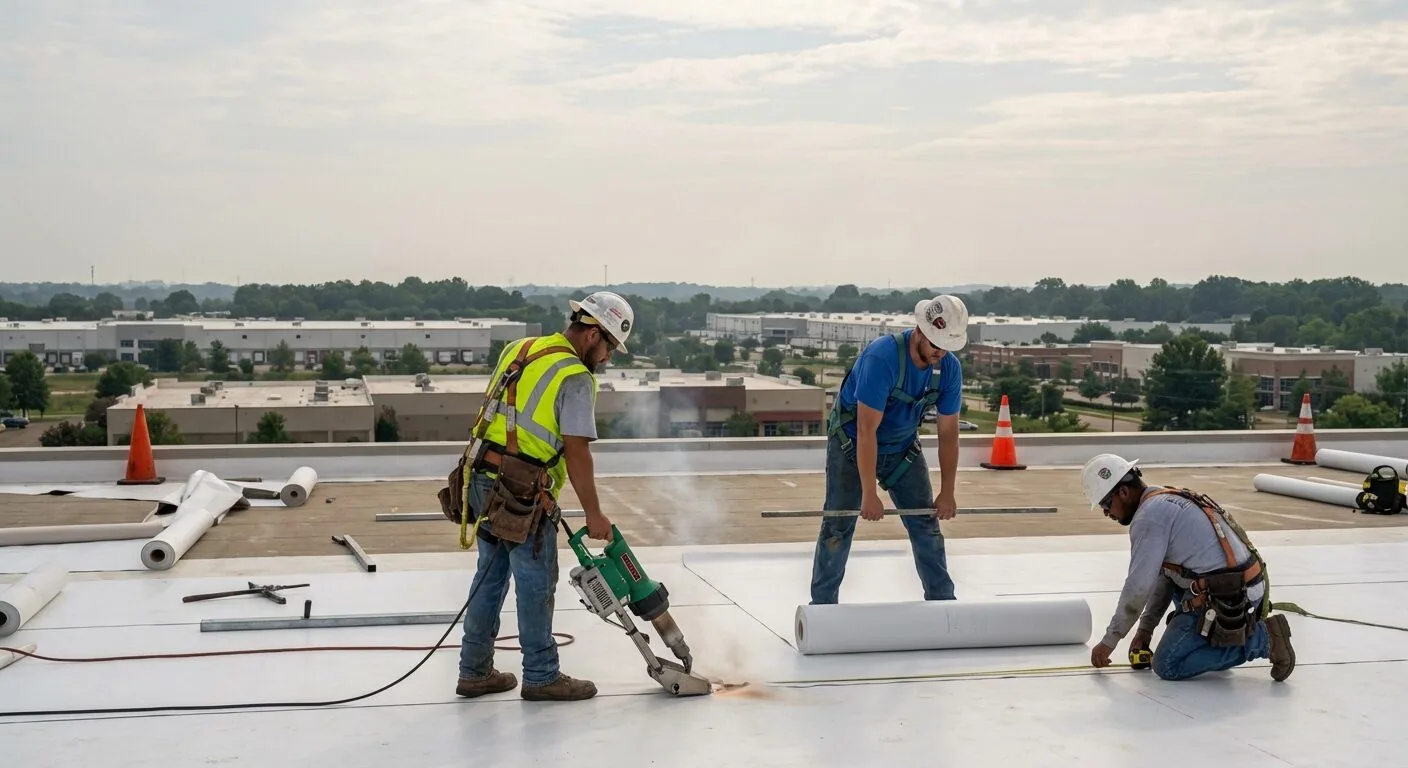

A seam beside a curb can explain a ceiling stain better than the stain’s position. We compare the interior symptom with roof seams, penetrations, outlets and wall transitions, then identify the material and connection that need repair. The tie-in must land on sound material rather than simply cover the visible mark.
For a commercial building in Santa Maria, the work order states the damage, preparation and tie-in check. The property manager receives photos and a marked location, plus a clear note if the nearby field, insulation or deck needs more investigation; a single repair remains distinct from a roof-wide review before the tie-in is scheduled.
Trace: follow water beyond the stain
Water can travel between membrane and insulation before it appears inside. We compare ceiling stains with roof slopes, seams, curbs, fasteners, drains and recent work, then inspect likely entry points. A repair begins only after the substrate and compatible materials are understood. That narrows the next test and repair boundary.
On a single-ply roof, we remove contamination and ready the substrate for the selected system, then form a patch with sound margins and welded or bonded edges. On metal, we evaluate seams, fasteners and flashing before choosing a repair. We record the area so future service can distinguish the repaired detail from a new leak elsewhere.
Weather: use station records carefully
At Santa Maria Public Airport's KSMX station, calendar year 2023 brought 21.52 inches of precipitation and a highest daily maximum temperature of 101 degrees Fahrenheit. We record the reported event date separately from the roof conditions observed during inspection.
We inspect for lifted edges, separated laps, brittle sealant and blocked drainage without assuming a cause. The Area 9 Industrial and Commercial Plan Area allows varied manufacturing and office uses. That land-use context can inform access coordination, but the crew still documents the roof's actual penetrations, equipment and operating limits.
Boundary: mark the work area
A useful work order names the roof area, assembly, defect, preparation and repair method. It also says what the repair does not include, such as concealed wet insulation outside the opened area or a separate curb that was not part of the water path. We set that boundary before a repair crew is mobilized.
Santa Maria's code requires a permit before a new roof covering is applied; a small maintenance repair may follow a different review path from a new covering, so we confirm the scope with the authority having jurisdiction when that distinction matters. We do not turn an isolated patch into a broad promise. The leak investigation and repair records both the entry detail and the affected interior area.
Drainage: check outlets and ponding
A repaired seam cannot compensate for a drain bowl that is set high, a blocked outlet or a depression that holds water. We check the drain, strainer, clamping ring, surrounding membrane and visible slope. Santa Maria code calls for drainage analysis and corrective measures when extensive ponding persists more than 48 hours after rain.
That requirement is especially relevant when a proposed repair changes a drain transition or when water repeatedly stands around a patched area. We document the observed low point and recommend a separate drainage correction if the repair alone will not address it. If the outlet contributes to the leak path, we can price drain and scupper correction with the membrane work. Repair timing can depend on whether a surface is dry enough for the selected primer, adhesive or sealant.
We check the roof surface and substrate against product requirements, delaying bonding until conditions are ready. If a leak requires immediate protection, we document any temporary cover separately from the permanent repair and return when conditions allow. That distinction gives the manager a clear record of what stopped water temporarily and what remains to complete the durable tie-in.
Occupied buildings: coordinate repair access
For an occupied building, repair timing can matter as much as the patch. We coordinate roof access, lift or ladder locations, odors or heat work, tenant notifications and protection for interior-sensitive areas. Betteravia is a commercial corridor, while the Area 9 plan area includes manufacturing, office and commercial designations. That coordination often matters.
Those broad planning facts do not prove the use of a specific parcel; they remind us to confirm actual operations with the property manager. Along U.S. Highway 101 and Broadway, deliveries and parking can also affect staging. We set the route and keep exits clear before tools reach the roof.
Follow-up: verify the tie-in
After the repair, we inspect the bond or weld, confirm the patch extends over sound material, check nearby terminations and clear debris from the drain path. Photos show the finished detail and the surrounding context. If the substrate remains uncertain or moisture extends beyond the opened area, the report recommends test cuts or a broader survey rather than calling the entire roof repaired.
A moisture survey may help identify where more invasive confirmation is useful, while a maintenance program tracks recurring details between major projects. For repairs that affect a new roof covering or a substantial area, we confirm whether permit review applies before work starts. The property manager should have the approved scope and any inspection documentation with the building's roof records.
On a small maintenance patch, the closeout still matters: the report captures the defect, material and weather conditions, plus the date and location of the repair. When a later leak appears, the earlier photos help show whether a later call points to the same tie-in or a separate opening elsewhere on the roof.
Cost: identify the repair drivers
Access, height, roof-system compatibility, wet material, edge metal, occupied-space protection and the number of separate leak locations drive repair scope. A patch at one curb may be straightforward; a path that crosses several layers or concealed transitions needs more diagnosis. We price visible work and define any allowance for material discovered after opening.
For portfolio budgeting, a condition report can group roof observations by property while keeping this repair tied to the specific building inspected. We leave the manager with a practical choice: authorize the defined repair, open a test area, or schedule a wider condition assessment. A TPO repair has different surface preparation from a repair to metal or a coating system, so the material should match the installed roof rather than the nearest product on a truck.
We check compatibility and record how the existing sheet accepts the new material at the tie-in. A Betteravia commercial roof assessment can document a specific property's loading, access and drainage without assuming that corridor plans describe its building. The repair quote then separates diagnosis, labor, materials, protection and any authorized opening of concealed layers.
Commercial Roofing Questions
Can you patch the ceiling stain from inside?
Interior work may protect finishes, but it will not close a roof entry point. We inspect above the stain, trace the likely path, and explain whether the roof surface or a penetration needs repair.
Will a repair stop all future leaks?
A repair addresses the identified defect and its tie-in. Other seams, drains or penetrations remain separate unless they are included in the scope. The report records that boundary and any next inspection needed.
When should the drain be part of the repair?
Include it when water stands near the leak, the bowl or ring is loose, or the membrane-to-drain detail is damaged. Persistent extensive ponding after rain requires drainage analysis under the City's code.
Can the building stay open during repair?
Usually we can plan roof work around occupied areas, but access, heat tools, odors and interior sensitivity affect the sequence. We coordinate the active zone and protection with the property manager before mobilization.
Plan the next roof visit
Tell us about the building and what you are seeing on the roof. Request a roof assessment and we will set up a time to look at it.