Manufacturing Roof Repair and Replacement in Santa Maria, CA
Set a production-aware roof inspection
Share the shift schedule, equipment service routes, known leaks, and prior roof records. We will inspect seams, curbs, drainage, and substrate evidence, then document a work boundary and dry-in sequence that fits the facility.
Request a roof assessment or call 555-555-5555.
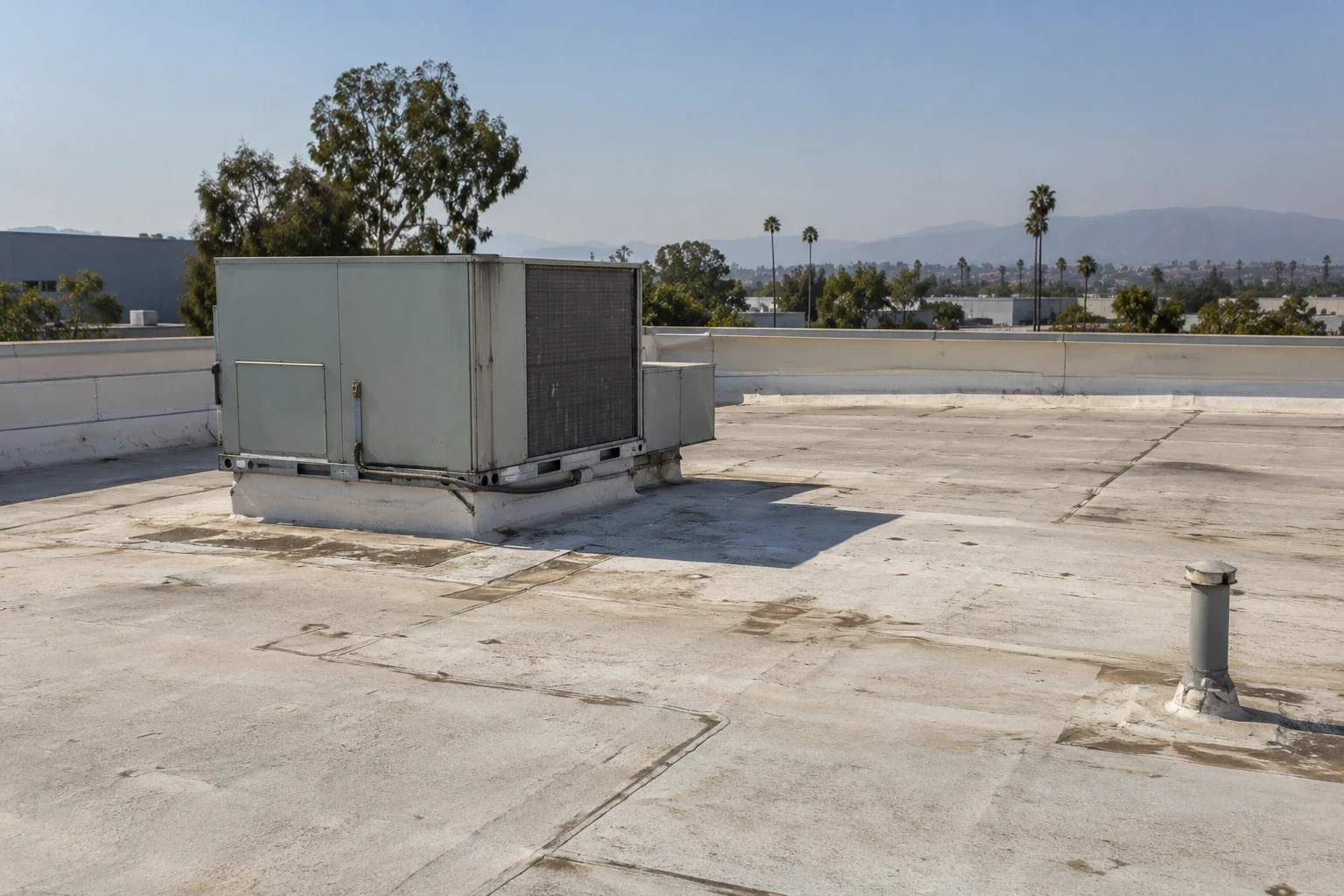
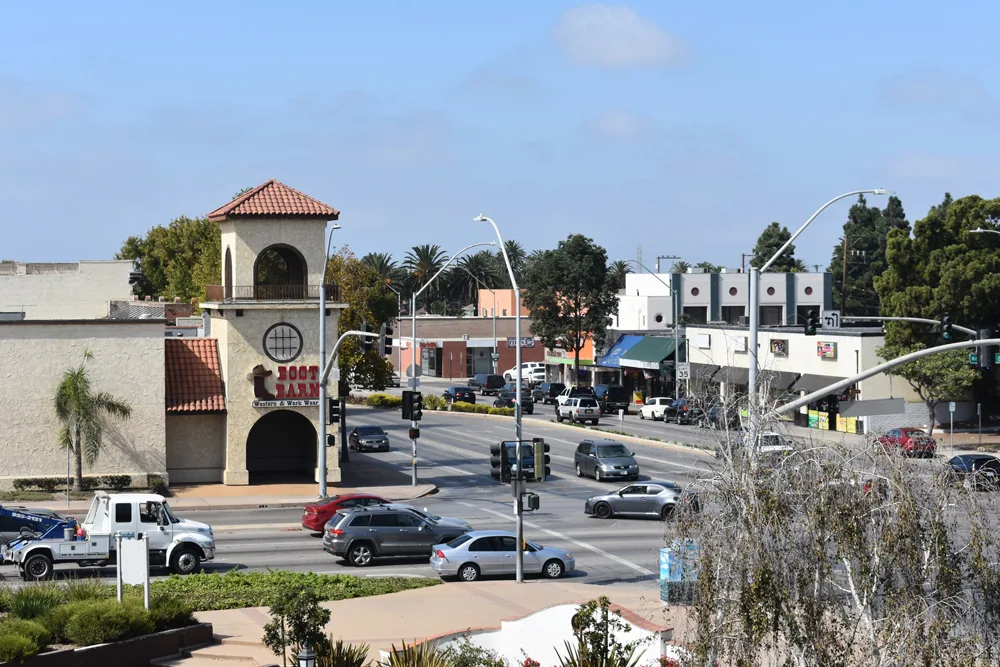
A fastener line beside an exhaust curb can interrupt production if the flashing opens during a shift. In Santa Maria, CA, we inspect the penetration, nearby laps, sheet attachment, and access route before setting a repair boundary. The Area 9 Industrial and Commercial Plan Area spans about 890 acres, with light and general manufacturing, commercial, office, and open-space designations. The Santa Maria Airport Business Park Specific Plan allows light industrial, research, manufacturing, and airport services. Those plans describe uses, not the systems installed on a particular plant.
Production teams need the roof sequence to fit equipment movement, shift changes, and the work happening below. We map roof zones, identify the staging area, record any interior protection, and state how much material can be opened before dry-in. For operators with multiple facilities, a multi-site roof schedule can track each building's condition and planned outage window without treating every assembly as the same job.
Inspection: trace the detail above the process
We begin at the reported area and inspect curb corners, pipe penetrations, seams, wall transitions, and drains that can feed water into the same zone. A leak near production equipment may involve a roof opening serviced by another trade, so we note disturbed flashing and the route used to reach the equipment. A roof inspection records the observed defect, nearby details, photographs, and any moisture readings that help set the next step.
The rainfall normal for Santa Maria's KSMX station is 13.32 inches per year, calculated over 1991 to 2020; plant drainage still needs a roof-level check. We inspect the plant's drainage paths and outlets directly before defining a repair boundary. We use the local context while checking the actual drainage path, outlet condition, and membrane laps. When extensive water remains across a roof two days after rainfall, Santa Maria requires drainage analysis and corrective action. If a low area affects process rooms or stored materials, we identify the drainage issue separately from a seam repair.
Building context: protect production and inventory
Before work starts, the plant contact can identify production windows, shutdown dates, forklift paths, and areas where dust or vibration needs control. We align roof access and material staging with those limits, then define the interior protection zone below the repair. If a test opening is needed to verify wet insulation or deck condition, we select a location that answers a scope question and document how the opening will be secured at shift end.
City records describe multi-lot industrial development in the Industrial Parkway Manufacturing Area. West Stowell's adopted plan allows industrial activity such as manufacturing and processing, alongside storage, utilities, warehousing, and repair work. Those are separate planning areas, and neither establishes a specific roof assembly. We inspect the actual curb layouts, pipe runs, seams, edge metal, and access points before pricing. A roof visit near Industrial Parkway can be scheduled against the facility's gate and shift requirements.
Repair options: match the work to the assembly
A localized repair may be appropriate where the sheet remains sound, the attachment holds, and the substrate is dry enough for a compatible detail. We prepare the surface, restore the lap or flashing, and mark the completed boundary. If multiple areas show wet insulation, movement, or recurring failures, we assess whether repair, recover, or replacement better fits the observed condition. A plant roof evaluation can organize those assembly and access questions before a larger capital scope is priced.
Equipment additions and service work can create new penetrations, abandoned openings, or traffic over seams. We coordinate the roof detail with the trade that needs access and specify the curb or support transition that must be restored. When a plant cannot stop production, we divide work into zones with defined staging and dry-in limits. A crew can be dispatched at night or on a holiday when a leak needs immediate attention. The first visit protects the process area from active water entry; a permanent repair follows when the source and substrate can be inspected safely.
Timing: include preparation and permit holds
For a replacement roof, Santa Maria requires the permit and a pre-roof inspection; written authorization must be in hand before application. Reviewers may examine the building's support, the roof deck, water flow, securement of the current layer, insulation moisture, and fire-protection details. We build that review into the schedule before installation and identify records or test openings that could help resolve the assembly. The plant's production calendar then informs staging and the order in which roof zones can be secured.
Fog can affect washing, bonding, and coating preparation. Across its 42-year observation window, KSMX registers a yearly mean of 62.4 days with heavy fog. That historic count is not a forecast for a plant roof. We check the surface and substrate before applying specified materials and adjust the work window if drying conditions are unsuitable. A phased reroof sequence can keep the active production boundary clear while the crew completes and dries in one section at a time.
Materials: record what is above the line
For a plant, the membrane is only one part of the assembly. We identify seams, cover board, insulation, deck, attachment, curbs, and metal transitions where they can be observed or confirmed from records. The system selected for repair or replacement needs to suit the substrate and the equipment transitions that cross the roof. A PVC roof system or another membrane may be considered after those conditions are documented; the name alone does not answer whether an overlay is suitable.
When concealed layers could change the scope, a test opening should have a specific purpose. We identify its location, the interior area to protect, and the temporary patch-back plan before making it. The resulting notes can show whether moisture is isolated or extends beyond the repair zone, and whether the deck or attachment needs a separate review. That evidence supports a clearer work limit and helps the production team plan around the area that will actually be opened.
Maintenance: preserve changes between shutdowns
Plant service work changes the roof as equipment is added, removed, or maintained. After each visit, we record the repaired zones, close photographs, penetrations checked, drainage observations, and any item that remains open. The next maintenance walk can compare those details with current service routes and identify fresh traffic or fasteners before a leak reaches the production floor. A roof condition report gives operations and facilities staff one place to review the work boundary and follow-up needs.
The same roof record helps coordinate manufacturing with the logistics team that depends on receiving and dispatch areas, and with health facilities that manage sensitive interior spaces. Each building needs its own access limits and repair sequence. We list what can be addressed in a routine visit, what requires a shutdown window, and what needs testing or a permit review before budget approval.
Commercial Roofing Questions
Can roof repairs take place during an active production shift?
The process area, equipment, and roof zone determine whether work can proceed. We coordinate material staging, noise, protection below, and the maximum area open at once with the plant contact. If the repair affects a critical production room, we can set a work window or divide the sequence so each section is secured before the next begins.
What should be checked around exhausts and process piping?
We inspect the curb or pipe boot, corners, membrane laps, attachment, and any flashing disturbed during service. The repair boundary should include sound material and a surface that can accept the specified detail. We record roof access for the equipment trade so future service does not cross a newly repaired seam without protection.
How can we tell if a recover is suitable for a plant roof?
Existing layers, attachment, deck condition, drainage, and wet insulation all affect that choice. We review records and visible edges, then identify a test opening if concealed conditions could change the assembly. The proposal states what is confirmed and what still depends on testing or city review before a new covering is installed.
What information belongs in the roof file after a shutdown project?
Keep the zone map, photographs, materials used, penetrations changed, permit and inspection notes, and any temporary protection. We also record the work sequence and the areas left for follow-up. That gives the next shutdown team a usable reference for access and maintenance without assuming that nearby roof sections were included.
Plan the next roof visit
Tell us about the building and what you are seeing on the roof. Request a roof assessment and we will set up a time to look at it.