Commercial Roof Inspection in Santa Maria, CA
Build a roof condition record
Provide any roof plan, leak log and prior repair notes. We will map accessible areas, photograph transitions, and separate repair priorities from conditions that need testing.
Request a roof assessment or call 555-555-5555.
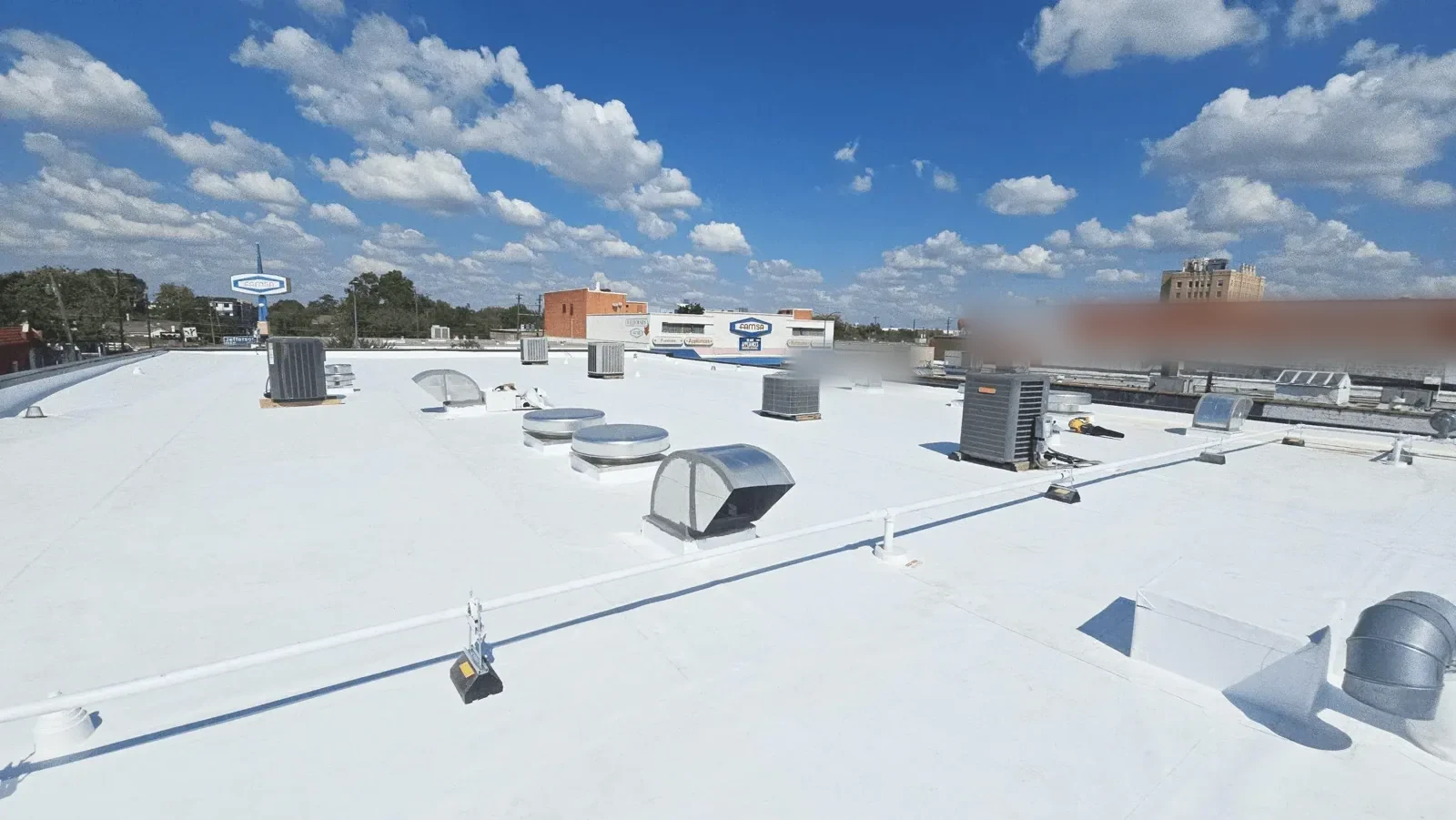
A loose termination at a curb can set the first inspection hold, especially if the manager needs a near-term repair budget. We walk accessible zones, identify membrane and transitions, compare visible wear with interior reports, and mark observations on a roof plan. Drainage and moisture are recorded on site, not inferred from a station.
For a Santa Maria building, the report separates confirmed defects from questions for test cuts, engineering or permit review. Rather than a folder of roof photos, the manager gets marked zones to carry into the next visit and compare against a documented baseline, with decisions tied to each condition for budgeting.
Map: divide the roof into zones
We divide a roof into practical sections based on elevation, system changes, additions and drainage paths. Each zone records membrane type where identifiable, edge conditions, penetrations, repairs, ponding and visible substrate issues. A marked map helps a manager find the observation later and compare it with the interior below. We photograph details from a consistent direction, label them and state whether the item is a repair, a monitoring point or a condition requiring further investigation.
The condition report turns those observations into a reusable property record rather than a one-time checklist. On multi-level or expanded buildings, the map should distinguish original construction from additions and roof zones that were installed at different times. A drain serving one section may not control another section's water, and a transition between membranes can be more important than the field itself.
We label each area with a stable name the manager can use in a work order. If there is no drawing, we create a simple orientation with north, access point and major roof features. That record prevents a recommendation from being separated from the part of the roof where we observed it.
Local records: use climate as context
Santa Maria Public Airport has a 1991-2020 normal of 13.32 inches of annual precipitation. During the visit, we examine low points, drain bowls, and scuppers alongside any reported interior symptoms.
If ponding is extensive and persists more than 48 hours after rain, local code calls for drainage analysis and corrective measures. We document observed depth and outlet condition, then distinguish routine debris removal from a slope or drain repair. The drain review can be scoped as a separate work item.
Details: inspect transitions closely
Membrane fields can remain serviceable while curbs, wall flashings, skylights or metal edges fail. We inspect lap bonds, patches, counterflashing, sealant and fasteners, noting where a detail is loose, cracked, wet or incompatible with the surrounding sheet. A relocated unit may leave an unused curb, and a new conduit can create a fresh membrane opening that needs its own flashing detail.
The Airport Business Park plan includes laboratory, technical development, manufacturing, and administrative uses. During an inspection there, we record the equipment and penetrations visible on the roof. We ask the manager to identify active units and access rules, then document the roof details actually present. We pay particular attention where another trade has worked.
New conduit, HVAC supports and abandoned openings can interrupt the membrane, while a replacement unit can leave old curb metal underneath a new flashing. We photograph the connection and record whether the detail is sound, loose or not visible enough to judge. The manager can then share the observation with the equipment contractor without assuming the roof is responsible for every interior symptom.
Where safe access is not available, we list that as an inspection limitation and avoid marking the area as passed. Santa Maria Airport Business Park and Area 9 Industrial and Commercial Plan Area are separate employment geographies, each with its own planned land uses. Those places help orient the manager's discussion, but none of the designations tells us the installed membrane or its remaining service life. Our report uses the actual roof map and photographs to define what was observed at the property.
Moisture: test where evidence leads
A moisture reading is one observation, not a verdict on the whole assembly. We compare it with surface condition, staining, drainage, repair history and readings from nearby areas. Infrared images can help identify temperature patterns for follow-up, but a test cut is what can confirm the concealed layers and substrate.
The report states the instrument, weather conditions and limits of the survey, then maps where a sample opening would answer a specific question. Our infrared survey can narrow the investigation before an authorized cut is made. Readings are compared against a dry reference area with similar exposure whenever the survey method allows.
We record where the reference was taken and how recent weather, shade or rooftop equipment may affect the comparison. A localized difference near an old patch may be surface temperature rather than trapped water. If the map suggests a larger wet area, we propose sample points at the boundary and explain which layer information each one will confirm. The property manager can approve a limited opening first, then decide whether the result warrants a broader investigation.
Permit: hold before covering
Santa Maria requires a pre-roof inspection and written approval before a new roof covering is applied. The inspection evaluates structure, deck, drainage, attachment of existing covering, wet insulation and fire-retardant requirements. We record those conditions during the roof assessment and flag where records or test openings would help the permit scope.
A repair or maintenance visit should not be described as permit approval. When replacement is being considered, the replacement scope can carry the documented assembly and hold points into the project schedule. On a roof in the Area 9 industrial plan area, we document the inspected property's assembly, access, and repair boundary.
Priority: turn findings into action
The final report ranks items by exposure and consequence: active water entry, unsafe access, open flashing, wet material, blocked drainage, or a developing issue to monitor. Each item includes a location, photograph, recommended next action and indication of confidence. We distinguish a patch that can be priced now from a concealed problem that needs approval for testing.
Santa Maria's economy spans commercial activity, manufacturing, agriculture, education, health care and government, which means inspection access and operating windows vary by property. The maintenance plan can schedule recurring observations without implying that one inspection predicts future performance. The report also notes items that affect safe maintenance, such as loose metal, unstable access points or equipment zones that require a shutdown.
Those observations should be addressed before routine service puts a technician near the hazard. For budget planning, we separate immediate water entry from a developing condition and a future replacement candidate. For budgeting, the capital planning review can connect each recommendation to its roof zone and documented condition.
Commercial Roofing Questions
Does an inspection include test cuts?
Only when authorized and when opening the roof will answer a defined question. We first mark observed conditions and readings, then identify the proposed opening, weather protection and decision that the sample will support.
Will infrared imaging confirm wet insulation?
It can point to temperature patterns that deserve a closer look, but it does not identify the concealed material by itself. We compare the image with roof conditions and use an authorized sample opening when confirmation is needed.
What should the report include?
A marked roof map, photographs, assembly notes, drainage and penetration observations, moisture findings, repair priorities and open questions. A manager can find each recommendation on the roof map and match it with the photograph or observation that supports it.
Does the inspection approve a reroof?
No. Santa Maria requires a separate pre-roof inspection and written approval before a new covering is applied. We document conditions that can inform that review, then schedule the City's inspection at the project hold point.
Plan the next roof visit
Tell us about the building and what you are seeing on the roof. Request a roof assessment and we will set up a time to look at it.