
Flashing Failure Repair in Santa Maria, CA
Arrange a flashing inspection
Share the leaking transition, roof area, interior symptoms and access limits. We will inspect the flashing and surrounding membrane, photograph the condition and define the tie-in before pricing repair work.
Request a roof assessment or call 555-555-5555.
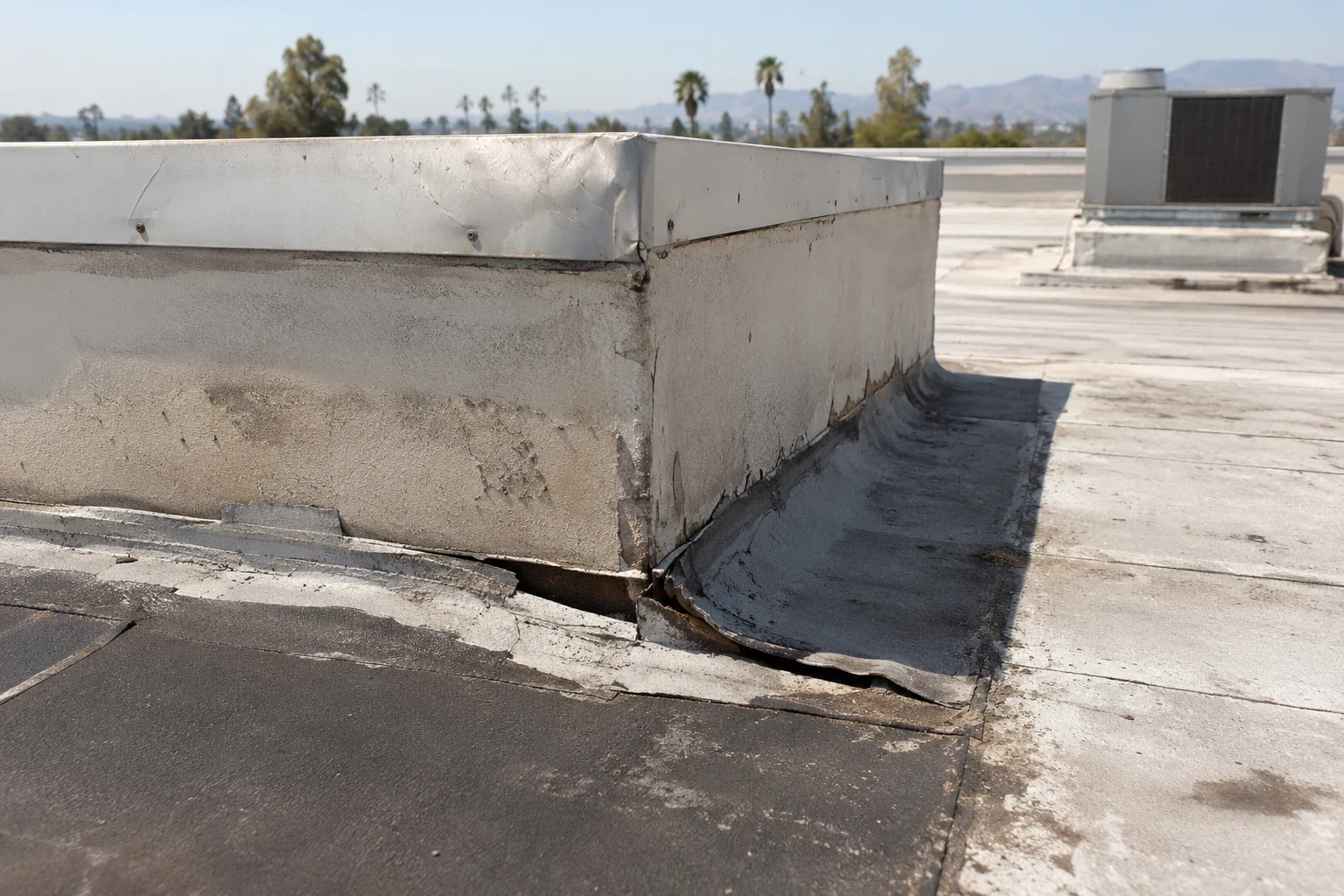

A flashing corner can look sealed from the roof while its upper termination has opened behind the counterflashing. We inspect both sides of the transition, follow water marks toward the detail, and see whether the roof sheet, metal or wall connection has released. The repair boundary should reach sound material and include a tie-in that sheds water back onto the roof, not trap it behind a new bead of sealant.
On a commercial roof in Santa Maria, flashing may meet a parapet, curb, skylight, pipe or metal wall. We photograph the failed transition, identify the membrane and note whether nearby seams or fasteners have moved. The written scope separates roofing work from repairs to siding, masonry or equipment performed by another trade. A penetration-flashing inspection can check related openings while we document the failing detail.
Failure patterns: find the open edge
Water can enter where a metal leg has lifted, a sealant joint has split, a membrane turn-up has pulled loose, or a fastener has backed out. At a curb, the problem may sit at a corner where two flashing planes meet. At a wall, the upper edge may have no secure termination even when the lower metal looks intact. We check lap direction, movement, substrate, fasteners and the path water could follow before deciding which piece must come off.
A mark on the ceiling does not locate the opening by itself. Water may travel along a deck flute, insulation joint or framing before appearing inside. We compare the interior report with roof penetrations and wall transitions, then mark the locations inspected. If the leak also crosses a membrane lap, a seam repair may be needed alongside the flashing tie-in. We list those as distinct details so an owner can see what is included and what needs a separate opening.
Repair method: make the transition compatible
We remove loose material and prepare the substrate before installing compatible flashing or membrane. Depending on the assembly, the repair may use welded sheet, bonded flashing, formed metal or a liquid-applied detail. A new layer must tie into sound roof material and terminate securely above the water path. Adding sealant across a dirty or moving joint can hide the gap briefly without restoring the connection. The proposal describes preparation, new material, fasteners and any termination metal required.
Each roof system has its own detail. Single-ply sheet needs a compatible flashing piece and a clean weld or bond. Built-up and modified-bitumen roofs require an appropriate tie-in with the existing plies. Metal panels can move as temperature changes, so the repair has to account for panel laps and the flashing's attachment. We identify the installed system before selecting material. A TPO roof detail differs from a standing-seam transition, even if both have a curb at the same location.
Local conditions: choose a workable repair window
Santa Maria's KSMX station averages 62.4 heavy-fog days a year across its 42-year record and logged 21.52 inches of precipitation in its 2023 summary. For flashing work, the actual surface condition determines whether primer, adhesive or liquid material can be applied. We check the substrate at the roof, follow the selected system's preparation requirements and record any weather delay that changes the return sequence.
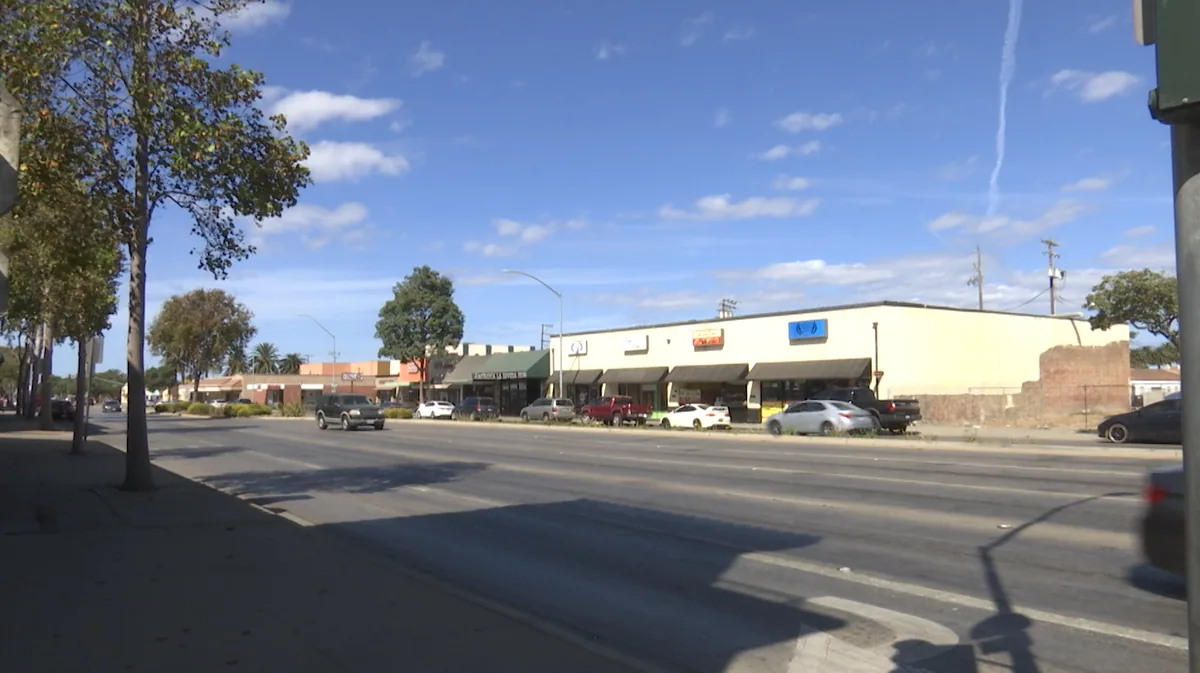
West Stowell permits manufacturing and processing, warehousing and storage, utilities, and equipment repair. The Airport Business Park plan allows research, manufacturing and airport-service uses. The manager confirms roof access, delivery windows and equipment restrictions for the property. If a transition is next to an active exhaust or production line, we coordinate protection and work timing with the site contact. A roof walk in the Airport Business Park begins with the building's access route and the actual flashing assembly.
Scope boundary: keep adjoining trades clear
A flashing repair can expose a condition beyond the roofing scope. Soft sheathing, corroded wall framing, cracked masonry or a leaking equipment connection may require another trade before the roof tie-in is complete. We photograph what is visible, protect the opened area and describe the handoff. The price states whether removal and replacement of that material is included or held for written approval after the condition is assessed.
Where new roofing work is extensive, Santa Maria requires a permit and a pre-roof inspection before a new roof covering is applied. That inspection considers structure, deck, drainage and attachment of the existing covering. A limited maintenance repair may follow a different path, so we confirm the applicable review for the work proposed. The roof-repair scope can coordinate the flashing with adjacent membrane work while keeping a separate wall or equipment repair visible in the estimate.
Building use: plan access around the opening
Opening a flashing can release debris or odors and may require a lift, hot-air tool or controlled roof access. We plan the route, staging and protection before mobilization. A retail or office property may need a quiet window above occupied space; an industrial roof may have clearance rules around service equipment or deliveries. We ask the property contact to confirm those limits and keep the work area clear before material is carried up.
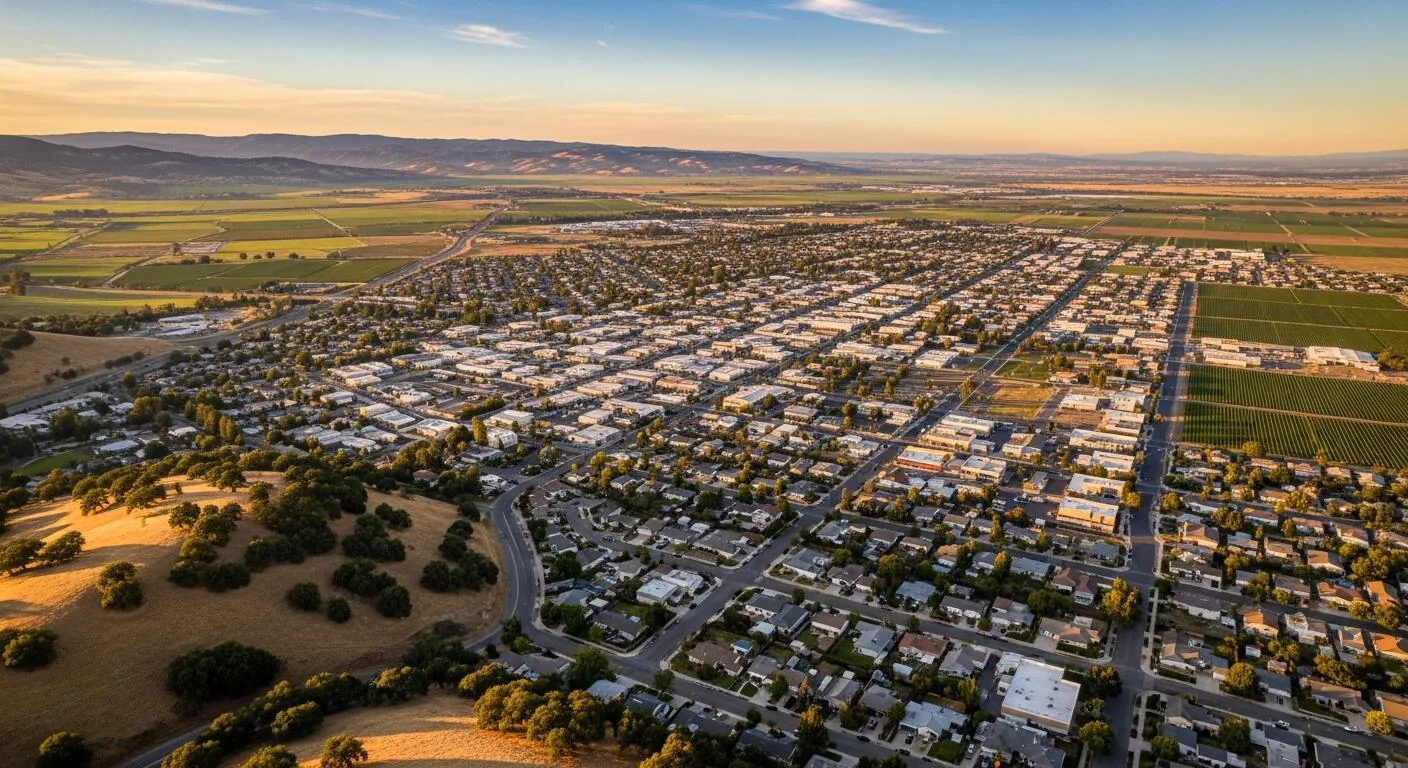
For a multi-building property, including work near West Stowell or Downtown Santa Maria, we attach the inspection schedule to each roof zone rather than to the mailing address. We record which transition was checked, how the crew reached it, and whether escort or production limits changed the sequence. We inspect each structure separately and record its flashing, substrate, and repair boundary in that property's notes.
Verification: check the termination after repair
Once the repair is complete, we check the bond or weld, upper termination, corners and adjacent roof sheet. We clear debris and confirm that nearby drains and overflow paths remain open. Photos show the repaired detail in context, and the closeout identifies the material and work limits. If a test opening revealed wet insulation outside the repair area, the report keeps that item open and describes how the manager can authorize further investigation.
Recurring trouble at several penetrations can justify a broader roof walk. A condition report can organize findings by roof area, while the maintenance program tracks terminations and changes after service work. A wind-damage review may be appropriate if lifted metal or membrane movement affected the flashing. The record makes clear whether that second condition was found or remains to be checked.
Commercial Roofing Questions
Can you repair only one failed flashing detail?
A local repair can work when surrounding material and the substrate remain sound. We inspect adjacent corners and terminations, then price the defined opening. If the same separation appears at several transitions, we show the additional locations and explain what a broader scope would include.
Why does flashing leak after a sealant bead was added?
Sealant does not secure a loose termination or correct a lap that directs water behind the metal. We check preparation, movement and attachment, then select a repair that ties into compatible material and holds the upper edge in place.
Will the crew replace damaged wall material too?
The roofing proposal states whether accessible wall sheathing or substrate removal is included. Structural framing, masonry and equipment connections may require another trade. We document those findings and coordinate the roof opening so water protection remains part of the sequence.
How do you set the repair boundary at a curb?
At a curb, we inspect each corner, the vertical flashing, top termination and nearby membrane before marking the scope. The repair includes the length needed to reach sound material. A second seam or curb connection is listed separately if it falls outside that boundary.
Can flashing work proceed during a foggy morning?
We check the roof surface and substrate at the property. Dampness can affect primer, adhesive and liquid-applied materials, so preparation follows the product requirements. If the detail is not ready, we protect the opening and schedule the permanent tie-in for a suitable window.
Plan the next roof visit
Tell us about the building and what you are seeing on the roof. Request a roof assessment and we will set up a time to look at it.