Commercial Roof Seam Repair in Santa Maria, CA
Schedule a roof seam inspection
Send the roof area, leak location, membrane type if known, and access limits. We will inspect the seam and adjacent sheet, document the repair boundary, and price the preparation and verification steps.
Request a roof assessment or call 555-555-5555.
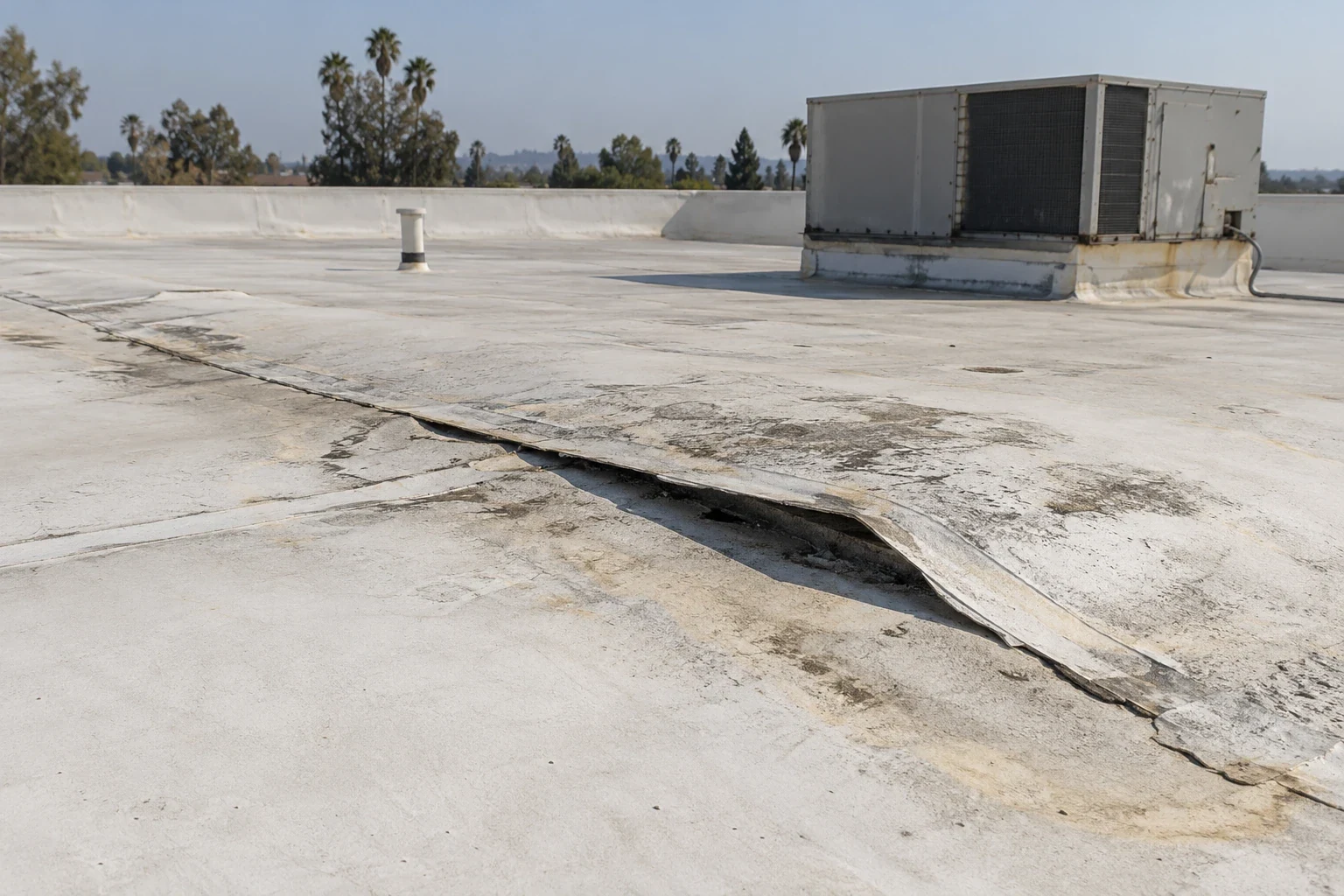

A lap that opens at one end can admit water even while the rest of the seam looks flat. We check the direction of the sheet, the seam width, nearby fasteners and any change in substrate before marking a repair boundary. A useful repair reaches sound material and restores the seam's water-shedding connection. It also accounts for movement at the end of the lap, where a short patch may stop before the point that keeps separating.
In Santa Maria, we identify the roof assembly before choosing a method. A heat-welded thermoplastic seam, a bonded EPDM lap, a modified-bitumen overlap and a standing-seam metal joint each need different preparation. The site report records the material, surface condition and affected roof area so the property manager can compare the proposed work with earlier repairs. A commercial roof repair can include the seam with related membrane details when those items are in the approved scope.
Diagnosis: separate an open lap from surface wear
We examine the seam's full run and both ends, looking for a separated edge, weak weld, adhesive loss, contamination, wrinkles or a fastener that has pulled through. A probe can help locate a loose bond, but the surface condition and roof assembly determine how much of the lap should be reopened. We mark sound material on each side of the defect, then check whether the sheet can accept new material without tearing or lifting adjacent seams.
The leak may show indoors far from the failed joint. Water can travel between membrane and insulation, follow a deck flute or move along a curb before it becomes visible. We compare the reported interior location with the seam path and photograph evidence at the roof. If the sheet is displaced from wind, a wind-damage repair can address the related lift, while the seam scope remains a separate tie-in. That distinction helps the owner decide whether one localized failure or a broader sheet problem needs action.
System methods: match the repair to the seam
On TPO or PVC, we remove dirt and incompatible material, prepare the sheet and weld a compatible patch or replacement section. We test the weld and check its edges after cooling. EPDM requires a clean, primed surface and a compatible adhesive or seam product; an old adhesive line may need to be removed before new material bonds. Modified-bitumen and built-up seams use their own lap preparation. The written scope identifies the selected materials and inspection method rather than treating every black or white roof as the same assembly.
Standing-seam metal panels move as temperatures change. We inspect the seam lock, clips, fasteners and adjacent flashing before applying a repair compound or replacing a component. A sealant bead that bridges an active movement joint can split again. A TPO seam, EPDM lap and metal seam need distinct preparation. We confirm the installed system before ordering material.
Risk: keep water from entering the insulation
An open lap can let water reach insulation or deck before a ceiling stain appears. Continued wetting may expand the area that must be opened, slow adhesion, and add interior protection or drying to the repair sequence. We note whether insulation feels soft, whether membrane has blistered and whether moisture appears beyond the visible split. When those signs are present, a test opening or moisture survey may change the scope. The property manager can authorize that investigation before a larger area is disturbed.
NOAA's Santa Maria airport station recorded 21.52 inches of precipitation during 2023 and lists 13.32 inches as the 1991 to 2020 normal. We compare the report with the roof's own drainage paths, seam condition, and repair history. They support planning for dry-in, while the roof itself sets the repair condition. We check nearby drains and protect the seam without covering an outlet. A ponding-water assessment can be added when standing water repeatedly reaches the joint.
Local use: coordinate the work window
South Blosser includes food-processing, greenhouse, and industrial projects; North Broadway has hotel, retail, medical-office, and commercial-shell projects. The manager confirms operating hours and access rules at the property. Those area-level records suggest different access questions, but not the actual operating rules at a building. We confirm the site contact, occupied hours, lift route, and escort requirements directly. For crew travel, the airport-to-central-city route follows the 135 toward Highway 1; we verify the specific entrance before dispatch.
The KSMX archive counts 62.4 heavy-fog days per year over its listed period. For a seam treatment, that long-term figure is only background; the joint must be dry enough for the selected method on the day of work. We inspect at the proposed weld or bond line and record the surface condition before committing to the return sequence.
Repair scope: state what happens if the opening grows
The proposal names the seam run, approximate repair limits, preparation, material, inspection and any temporary dry-in. It also explains what is excluded, such as saturated insulation outside the opened area, a damaged deck, or a second seam not visible from the first repair. If new damage appears during removal, we document it and pause at the agreed boundary while the manager reviews the added work. This avoids hiding a larger condition beneath an unapproved patch.
A scope that lays down a new roof covering follows the City's permit review and pre-roof approval steps. A focused seam repair is assessed separately, unless its final scope becomes a covering application. We give the manager assembly details and a condition report that identifies which zones remain unopened or need follow-up before the crew expands work.
Verification: test the finished seam
After a membrane repair, we check the full patch perimeter and probe or test the weld where the system permits. On a bonded lap, we inspect adhesion and the termination of the new material. For a metal seam, we examine the connection after the repair and confirm nearby fasteners and flashing remain secure. We photograph the detail, record surface preparation and clear debris from the drainage path. The closeout reports any limitation that prevented full verification.
When repeated seam work signals a maintenance issue, photos and mapped locations let the next visit compare the same roof area. A maintenance program can record open laps and follow-up checks. Near Lompoc, the manager confirms access; location does not identify the membrane type. We use the roof plan and inspection notes to keep the repair tied to the correct building and seam.
Commercial Roofing Questions
Can a split seam be patched without replacing the sheet?
A patch can work when the surrounding membrane is flexible, cleanable and firmly attached. We inspect both ends of the split and check the substrate before choosing the patch size. If nearby seams are also releasing or the sheet tears during preparation, we document the wider condition and compare options.
What causes a welded seam to open?
A weak or contaminated weld, movement, incompatible repairs or sheet distortion can contribute. We inspect the seam and adjoining field, then test sound material where appropriate. The repair plan records the defect and the length of seam to restore, rather than covering only the visible opening.
How do you repair an EPDM lap?
An EPDM lap needs clean, prepared surfaces and a compatible bonding method. We remove material that would interfere with adhesion, apply the specified primer or adhesive, and check the new seam edge. Weather and substrate moisture can change when those steps can be completed.
Can standing water cause seam separation?
Repeated ponding can keep a joint wet and expose a weak edge to more water. We inspect the seam and drainage route together, then separate membrane repair from any correction to a low point or outlet. Each item is priced according to its own work boundary.
What if the seam is still open after the repair?
The closeout notes how the finished edge was checked and what conditions limited the inspection. If a follow-up test shows separation, we compare it with the repair photos and material record, then identify the additional work needed to restore the connection.
Plan the next roof visit
Tell us about the building and what you are seeing on the roof. Request a roof assessment and we will set up a time to look at it.