Metal Roof Retrofit in Santa Maria, CA
Arrange a metal roof walk
Share access, lift and operating limits. We will inspect fasteners, seams, coating and drainage, then document the retrofit boundary and proposed staging before pricing.
Request a roof assessment or call 555-555-5555.
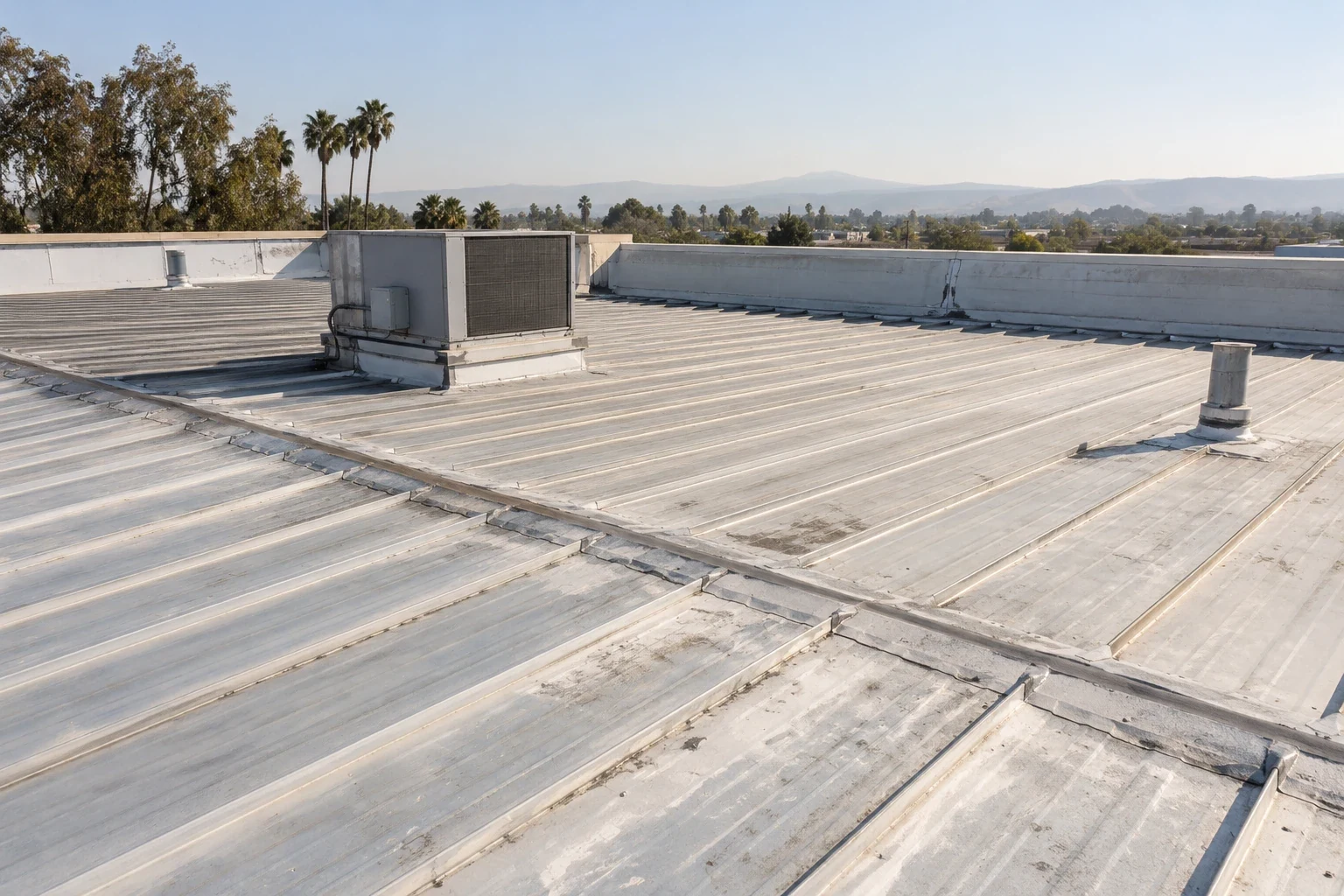
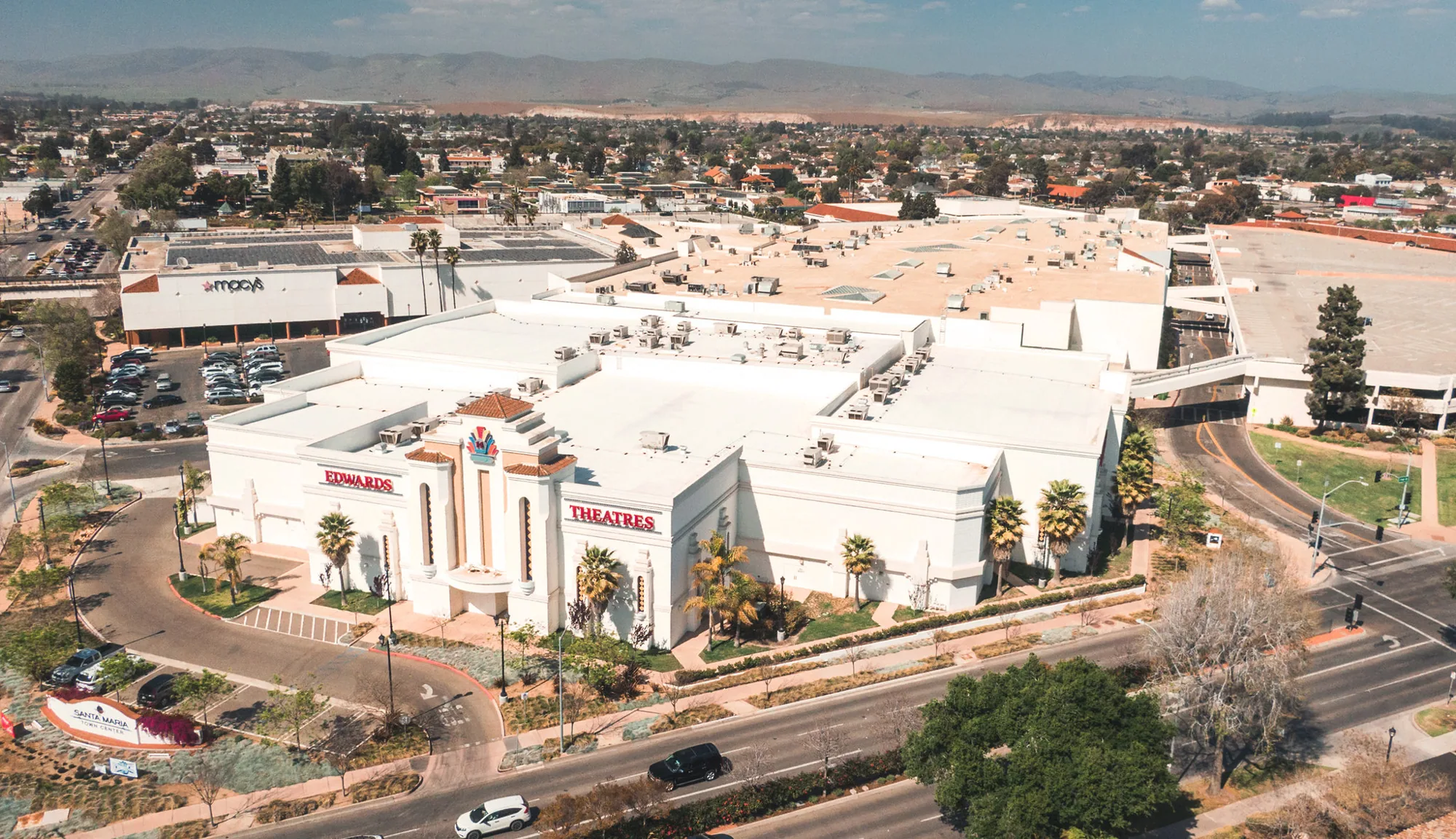
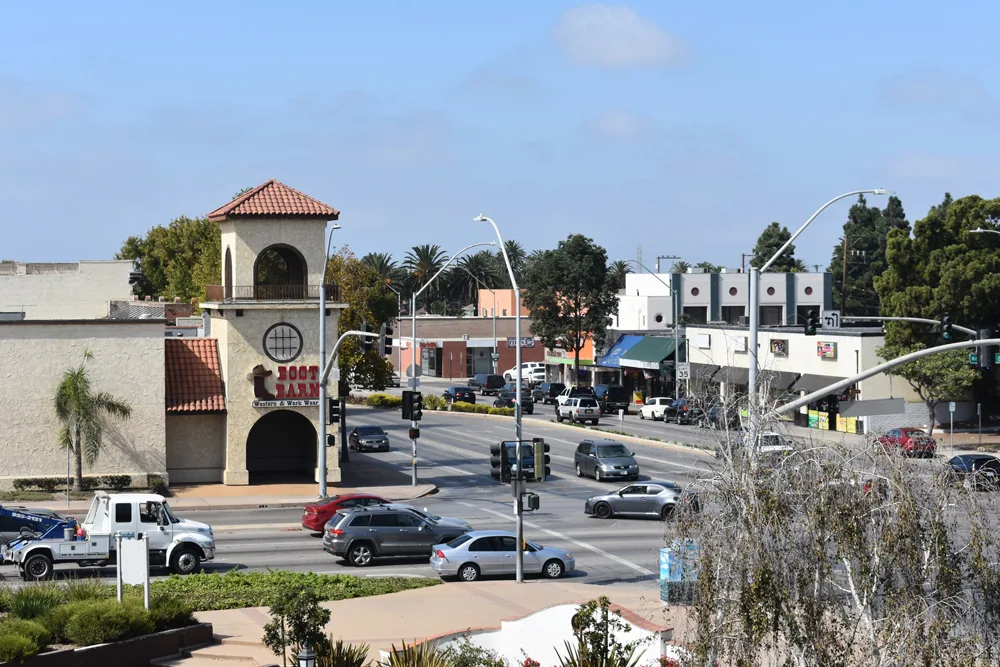
A washer that has flattened or split leaves an exposed-fastener metal roof with a small opening at the screw, but the panel around it may also have loosened. In Santa Maria, CA, we map the fastener pattern, seam edges and coating condition before deciding whether repair, restoration or replacement fits. Enos Ranchos planning includes regional and warehouse retail, corporate office and auto-related commercial uses; Betteravia Industrial Park is planned for light manufacturing across multiple lots. At either location, the roof walk identifies the failed detail, while the manager confirms access and staging limits.
A retrofit may renew a serviceable metal roof by addressing fasteners, seams, flashings, underlayment or a compatible coating system. It is not one product applied over every panel. The inspection identifies attachment, corrosion, movement, drainage and substrate conditions that determine the available options.
Fasteners: distinguish loose from corroded
We check representative rows for backed-out screws, flattened washers, rust at cut edges and movement around penetrations. A fastener may appear loose because the panel has shifted, the supporting purlin is damaged or the screw no longer bites. We note the pattern and inspect the panel and support before specifying replacement hardware. Tightening every screw without identifying the cause can distort the sheet or leave water paths unresolved.
Seams, ridge caps, eaves, valleys and wall transitions need a separate look. Old sealant can crack over a moving joint, while corrosion may concentrate where debris stays damp. We document locations and photographs in a condition record and mark what needs a test opening. That gives the property manager a measured account of visible fastener, panel and flashing conditions rather than a blanket statement about the whole roof.
Coating: prepare the metal first
A coating can only perform when the existing surface is suitable and properly prepared. We identify the metal and prior finish, remove contaminants where specified, address corrosion and check that seams and fasteners are ready for treatment. A coating bridges neither a moving panel gap nor a loose attachment by itself. We review the system requirements for primer, reinforcement, film build and cure conditions, then note which details receive separate flashing or sealant work.
For a roof that needs extensive panel replacement, compare the retrofit with a new standing seam assembly or a low-slope silicone restoration system only after the substrate and drainage are understood. Panel profiles and attachment differ. Edge transitions may require a coping and trim repair to keep the renewed surface connected to walls, curbs and eaves.
Scope: repair, restore or replace
Isolated loose fasteners, a limited seam opening or a small corroded area may support a repair if adjacent metal and support remain sound. We identify the repair boundary, replace compatible hardware, restore the joint and confirm that runoff reaches the intended drain or eave. The repair scope separates these items from coating or panel work elsewhere. Where metal is perforated, attachment is broadly compromised or corrosion reaches the substrate, coating alone is not an appropriate fix.
A restoration scope can include fastener replacement, seam reinforcement, surface preparation and coating, while a replacement plan addresses panels, underlayment, insulation and transitions. The proposal should state what is removed and retained. For a new covering, the permit comes first, followed by City approval before close-in. Review can reach the structure, deck, water route, existing attachment, wet insulation and fire-retardant needs, so we carry that hold in the sequence. We carry those steps into the project schedule rather than treating them as a field-day detail.
Access: coordinate lifts and roof work
Lift reach, panel lengths, material storage and roof access can decide how much work fits into a shift. We identify loading locations, areas under the roof work and any equipment that needs a clear service path. If the building stays open, a phased work plan sets boundaries for each area and clarifies temporary protection. We also state when crews need access to interior spaces or when an inspection hold must happen before a joint is covered.
Betteravia Industrial Park's plan addresses light-manufacturing uses across multiple lots; Enos Ranchos planning includes retail, office, auto-related and other uses. We confirm operating hours and delivery routes with the manager before setting the sequence. Coating work also needs suitable surface preparation and cure conditions, so the production sequence follows the selected system and actual roof conditions.
Local setting: inspect the roof in front of us
Enos Ranchos planning includes architectural and streetscape standards, while Betteravia's plan sets site, architectural and building-review standards across its industrial lots. For retrofit selection, we inspect panel geometry, penetrations, exhaust, access and the path stormwater takes off the roof. The field record, not a district designation, sets the repair boundary.
Where roof areas connect across additions, we check the joint between panel profiles and any change in slope or supporting structure. We note whether the existing panels can accept the proposed attachment and whether water can discharge without backing up at a closure. A roof visit in Enos Ranchos still begins with the actual building, its operating needs and the accessible panel details. A test opening can confirm concealed support conditions before retrofit selection.
Closeout: keep repair limits visible
The closeout record identifies fastener rows replaced, seams reinforced, coating areas treated, panels changed and edges that were not included. Photographs should locate the detail, not only show a close-up. Later maintenance checks can revisit representative fasteners, joints, penetrations and drains. If a test opening found damaged support or wet insulation, we list that condition separately so the owner can decide whether further work belongs in the current scope.
Before the roof walk, share lift limits, operating hours, access routes and equipment clearances. We will inspect the fasteners, panel seams, coating and drainage, then document the selected repair boundary and staging sequence. A written estimate can distinguish a localized repair from a complete retrofit or replacement, with assumptions about preparation, underlayment, insulation and inspection included.
Commercial Roofing Questions
When can exposed fasteners be replaced in place?
A replacement screw needs sound metal and support beneath it. We check the washer, panel movement and fastener bite across representative rows, then identify compatible hardware and any damaged backing. If the panel or support has failed, changing screws alone will not correct the condition.
What must happen before a metal roof is coated?
The existing surface has to be identified, cleaned and prepared to the selected system requirements. We address corrosion, loose fasteners and open seams first, then verify which details require reinforcement or separate flashing. Coating over a moving joint or unsound panel would leave the underlying issue in place.
How do you decide between retrofit and replacement?
Panel condition, attachment, substrate, corrosion, drainage and the amount of failed material guide the choice. We document the limits of repair, then compare restoration work with replacing the assembly. Santa Maria permit and pre-roof inspection steps are included when the scope applies a new roof covering.
What changes the retrofit schedule?
Lift access, surface preparation, weather conditions, cure time, inspection holds and the amount of roof available for safe staging all affect the sequence. We confirm operating windows and equipment access before mobilization. After the roof walk, the work plan can set daily areas around confirmed access and staging limits.
What should be listed in the closeout?
The record should show replaced fasteners, treated seams, coated areas, new panels and work excluded from the boundary. We include photographs and identify any concealed condition that needs later review. That makes a future maintenance check specific to the parts of the roof that were addressed.
Plan the next roof visit
Tell us about the building and what you are seeing on the roof. Request a roof assessment and we will set up a time to look at it.