
Ponding Water Roof Repair in Santa Maria, CA
Arrange a ponding-water roof walk
Send the roof area, the time water remained after rain, and any interior symptoms. We will inspect the low point, drain path and membrane around it, then document a defined correction and any follow-up review.
Request a roof assessment or call 555-555-5555.
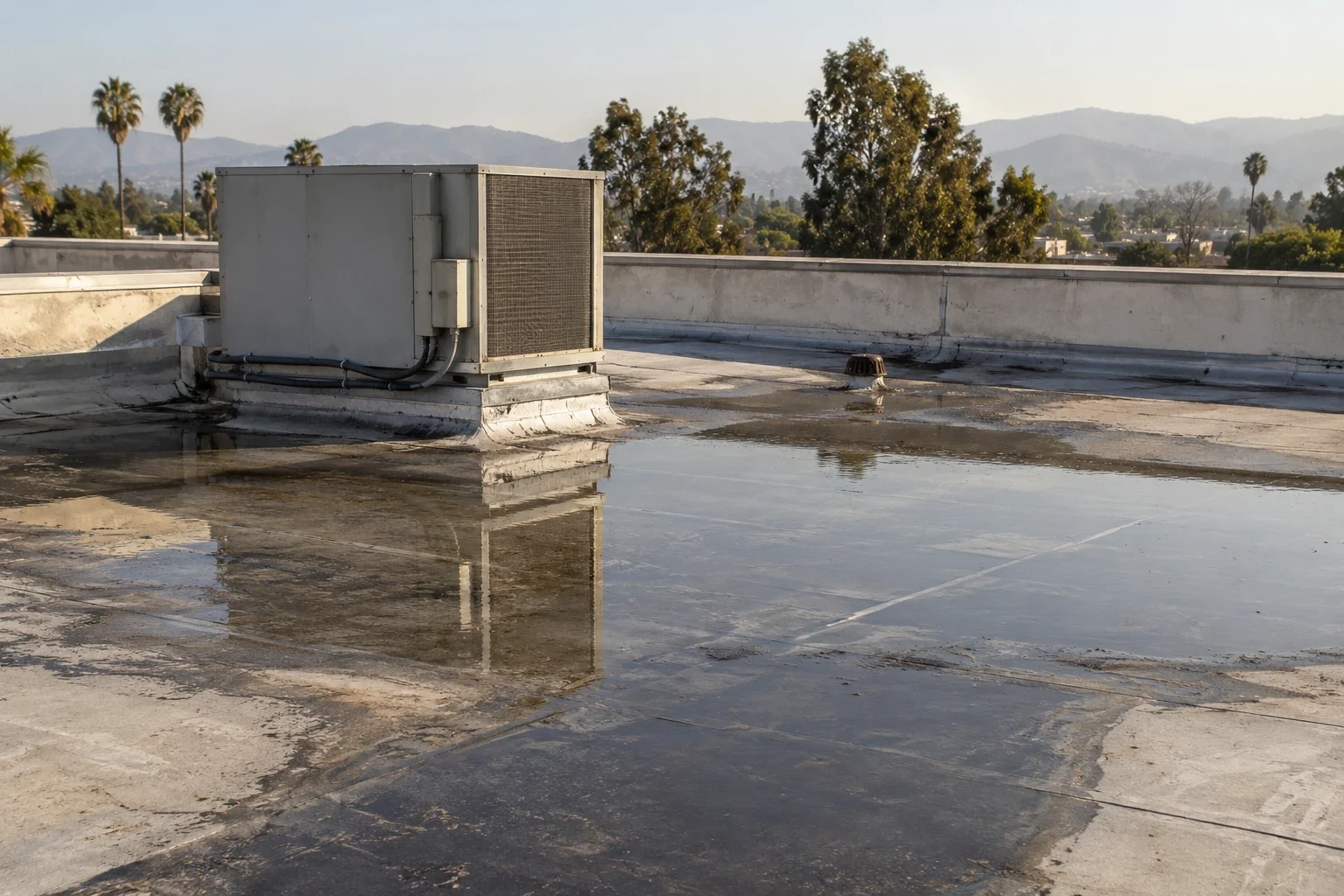
A waterline around a roof depression can remain after the drain bowl has been cleared. We check the low point, its feeder slope, outlet height and surrounding membrane before choosing cleaning or correction. The outline shows where water stood, not why. The repair boundary states what can be addressed and what additional opening would change the scope.
For a commercial building in Santa Maria, our inspection records the affected area, observed depth and approximate duration after rain, plus any interior leak. We check whether the strainer, scupper and overflow path remain open, then follow seams and equipment curbs that cross the same route. A drain and scupper inspection can help distinguish a blocked outlet from a low area that needs correction.
Diagnosis: locate the low point and its feeder paths
Water can collect because debris narrows an outlet, the drain bowl sits above the membrane, a leader is restricted, or the roof surface has settled. We check the bowl, clamping ring and surrounding sheet, then follow the slope from the high side. A patch that sits across the flow route can also hold debris or redirect water. We photograph the depth and boundary, note nearby seams and curbs, and mark any condition that cannot be seen without opening the assembly.
When an extensive roof area continues to hold water after the 48-hour period following rainfall, Santa Maria requires a drainage evaluation and corrective measures. We first locate the wet footprint, note the observation timing, and check whether an obstructed outlet explains it. The service record can then separate a maintenance issue from a question about the roof's geometry.
Water path: keep drains and overflow working
A primary drain and an overflow outlet serve different points in the roof's drainage plan. We confirm each path is open and look for a bowl that has pulled loose, damaged flashing, a blocked scupper throat or a membrane termination that sits too high. Debris removal may restore flow when the obstruction is loose material. It will not lower a raised bowl or give a depressed field a route to the drain. The work scope names each outlet involved and identifies any plumbing condition outside roofing work.
Where ponding reaches a seam, we check the lap for contamination, separation and trapped debris. We compare any ceiling symptom with the roof location, protect open drains during repair and clear the work area before closeout. If the water has damaged a lap, a seam repair may accompany the drainage correction. The leak trace documents a separate interior water path when needed.
Local context: use the record without assuming site conditions
KSMX recorded 21.52 inches of precipitation in 2023; its 1991-2020 annual normal is 13.32 inches. The historic KSMX record also averages 62.4 heavy-fog days a year. For a repair visit, we test the actual work surface and substrate before primer or adhesive, then document any condition that changes preparation.
West Main is planned as a commercial and industrial center at Santa Maria's urban and agricultural edge. Downtown Santa Maria has a different land-use mix, including retail, food, service, entertainment and public uses. For a roof walk, we confirm access, occupied areas, deliveries, and assembly details with the property manager before scheduling. A West Main roof walk starts with the actual outlet map and work access.
Correction: match the work to the cause
If debris is the only obstruction, a controlled clearing and follow-up check may be enough. A loose drain flange needs a compatible membrane tie-in; a damaged bowl or leader may require coordination with a plumbing contractor. A low area can call for a tapered fill, drain adjustment or broader design review, depending on structure and existing layers. We identify the correction, roof area opened, materials and expected tie-in. If testing exposes saturated insulation or a soft deck, we stop at the approved boundary and price the added work separately.
A coating is an option only if the current assembly, drainage, and adhesion support it. It cannot lower a drain or correct a structural depression. Before comparing restoration with a patch or replacement, we review the roof build-up, moisture evidence, bond condition, and water route. A roof inspection can clarify the assembly; a linked flashing repair belongs in the proposal only when that detail is part of the evidence. If the scope installs a new covering, the City's pre-roof permit and approval sequence applies; a localized service call is evaluated on its own terms. A transition repair may join that work when the inspection ties it to the leak path.
Timing: let the surface reach a repair-ready state
Standing water can delay preparation even after the drain is flowing. We check whether the surface and substrate are dry enough for the specified primer, adhesive, weld or coating, then schedule the permanent tie-in around the system requirements. If water is entering the building, emergency response is available around the clock, all week and during holidays. Temporary protection is identified separately, including the area it covers, the route left open for runoff, and the return work still required.
Roof access can also affect timing. A retail property may need work before customer traffic, while a warehouse or production building may need a clear truck lane and coordinated equipment shutdown. We set a staging location, protect roof drains from construction debris and confirm who can open secured areas. Any requested after-hours work or trade dependency is listed in the proposal so the manager can approve the sequence. The emergency repair response can protect an active leak while drainage correction is evaluated.
Follow-up: compare the next observation
We close the work by photographing the repaired drain connection or low-point detail and confirming that debris is removed from the flow path. The report records the roof area, repair materials, surface preparation and any limit that remains. If water is still present, we note the time since rain and the area affected rather than marking the drainage work complete based only on a cleared bowl. A manager can compare a later observation against the same location and determine whether the correction changed the path.
For a property portfolio, a consistent roof plan lets the next inspection revisit the exact drain, overflow or depression. The maintenance visit can record outlet condition and repeat ponding, while a condition report groups priorities without merging one building's observations into another's. Betteravia tenant access may govern the inspection window. We leave the manager with photos, work limits and the next observation that would change the recommendation.
Commercial Roofing Questions
How long does standing water need to remain before it needs review?
If standing water covers an extensive zone and remains beyond the 48-hour point after rain, the City requires a drainage evaluation and corrective measures. Our notes identify the roof area, the time checked, and any outlet obstruction so the owner can decide on a documented basis whether a design review is next.
Can clearing the drain stop water from collecting?
Debris removal can restore flow when blockage is the cause. A raised bowl, restricted leader or low roof section needs a different correction. We inspect those parts together and state which work is included in the proposal.
Will a roof coating remove a low spot?
A coating protects a suitable surface, but it does not correct a structural depression or lower a drain. We assess the roof assembly and drainage path before including a coating option, and separate any slope or outlet work that remains necessary.
Can you tell if ponding has damaged the insulation?
Visible water marks do not show the full condition below the membrane. We look for blisters, soft areas and moisture indications, then recommend a test opening or moisture survey when those observations affect the repair. Any opened area is priced and documented.
What information should we keep after drainage work?
Keep the roof plan, drain location, dated photos, repair scope and the time water was last observed. Those records help the next visit compare the same low point and show whether a later leak follows the prior repair or a separate path.
Plan the next roof visit
Tell us about the building and what you are seeing on the roof. Request a roof assessment and we will set up a time to look at it.