
Fitness Center Roofing in Santa Maria, CA
Arrange a fitness center roof walk
Share room schedules, equipment access, and prior leak or repair records. We will inspect the roof zones and transitions, coordinate protection around occupied areas, and document a repair or replacement scope.
Request a roof assessment or call 555-555-5555.
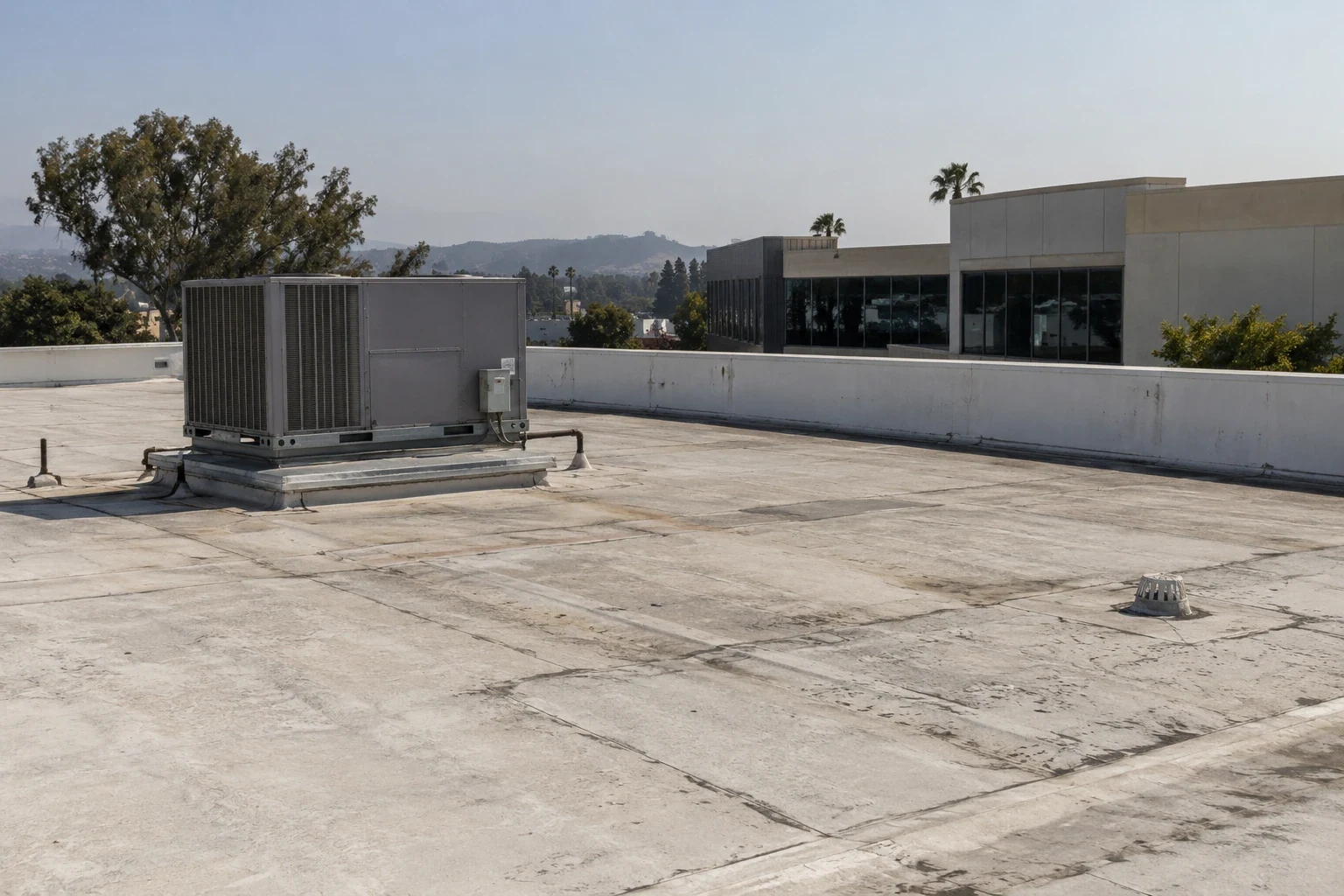

A loose metal edge above a studio entrance can change where the crew stages and which door stays open. In Santa Maria, CA, we inspect the roof edge, nearby drains, equipment curbs, and interior report before marking a repair boundary. A fitness property can contain workout rooms, locker areas, offices, and mechanical spaces with different access needs. We check the actual roof and plan around the occupied rooms below it.
Rooftop fans, condensers, exhaust ducts, and later service work create transitions that need a stable flashing detail. The building's use does not identify its membrane or prove a leak path. We trace the reported condition and record what is visible, then identify any opening that could confirm concealed moisture. A commercial roof inspection can leave the manager with a zone record tied to the reported leak, equipment bases, and areas requiring interior protection.
Inspection: check the equipment base
At each curb, we check corners, fasteners, sealant, and the membrane turn-up for movement or gaps. A fan vibration or later service visit can affect flashing even when the field sheet remains sound. We compare the roof detail with the interior report and note whether the suspected path reaches a drain, wall, or adjacent seam. If a test cut is needed, we select a point that can answer a question about the assembly.
We verify conditions at the property itself. We inspect the surface and substrate at the property before applying adhesive or coating. The report distinguishes visible dampness from an unconfirmed area beneath the membrane so the repair boundary follows what the inspection supports.
Drain bowls, scuppers, overflow paths, and the low points feeding them should be considered together. The local drainage rule addresses substantial water still present after 48 hours; we record the low area and outlet before defining corrective work for the fitness site. We photograph the outlet and surrounding laps, then separate drainage work from a patch when slope or outlet capacity needs attention. A drain and scupper inspection can address that part of the roof without expanding unrelated repairs.
Building context: work around occupied rooms
We ask which rooms, classes, check-in periods, and entrances need to remain available before setting a work window. A noisy repair over a studio may call for a different period from work above an office or storage room. The manager helps identify interior protection, a lift route, and a staging area away from member traffic. We list temporary entrance restrictions before the crew mobilizes.
For gyms near Betteravia Road and the Downtown commercial core, we schedule roof access around class turnover, member circulation, and staff duties at that specific property. We inspect the property, confirm its service entrances and equipment layout, and plan debris control around the actual routes used by members and staff.
Roof work near a mechanical penthouse or a row of exhausts may need a trade handoff before flashing can be closed. We record which equipment is active, who controls it, and where a technician needs access. The roofing scope covers the roof connection, not disconnection or repair of equipment outside it. A roof visit in Downtown Santa Maria can note the broader access setting, while the manager confirms the property's own operating schedule.
Repair options: separate membrane and equipment work
A repair can remain local when the surrounding sheet, curb, and substrate can accept a compatible tie-in. We remove loose material as specified, prepare sound edges, and shape the flashing around the actual base. If the curb moves or the deck is weak, another patch may not address the condition changing the work. We document the confirmed repair and identify any additional test or trade coordination needed.
When leaks recur in several rooms, we compare their roof zones with repair history, moisture evidence, attachment, and drain conditions. A commercial office roof review can address similar rooftop equipment and access planning, while a school roof inspection may involve another occupied schedule. Neither determines the fitness center assembly. We inspect the existing layers and structure before comparing patching, recover, or replacement.
On a larger project, the manager should know how much roof will be open, when the daily dry-in is complete, and which rooms may be affected. We identify staged material, temporary cover, equipment clearances, and any inspection hold. A replacement scope can divide the roof by zone and set separate access steps for the studio, office, and service areas. Photographs record transitions before the next layer covers them.
Timing: secure the surface and closeout
Santa Maria requires a permit and a city inspection before new covering is installed, followed by written approval. At that hold, the reviewer may assess the supporting structure, drainage, existing layers, moisture evidence, and fire-resistance provisions. We schedule the hold before installation and coordinate entry for the manager and inspector. The crew sets a work area that can be protected while members use unaffected rooms.
Fog and rain affect how a surface is prepared and when adhesive or coating work can proceed. We check the actual roof condition and limit the open section to what can be secured. If the surface is not ready, the sequence shifts before a new lap is left exposed.
Emergency calls can be handled at any hour, holidays included. We first limit water entry and protect occupied rooms, then record the temporary measure and permanent work still required. For scheduled work, we set the daily close-in point before removal begins. A phased occupied-building plan can help the manager coordinate classes, access routes, and roof zones while work moves across the property.
Maintenance: keep equipment changes visible
After a repair, we record the roof zone, curb or seam treated, materials, photographs, drain condition, and any access restriction. The manager can compare later equipment service with the same detail. We separate repaired areas from adjacent points that were inspected but not opened. A photo-based roof condition report can help organize that history for future budgeting and maintenance.
Later walks can check exposed seams, curb flashing, drains, edge metal, and paths used by service technicians. A relocated fan or new conduit can create a new penetration, so the access record should show where follow-up is needed after that trade finishes. We note any movement or moisture that could change the next work boundary. This keeps roof maintenance tied to the present assembly rather than a general calendar alone.
Commercial Roofing Questions
Can roof repairs happen while the fitness center is open?
We coordinate work windows, member routes, lift placement, and interior protection with the manager. If the repair is above an occupied studio, the scope identifies the area and period affected, then sets a dry-in boundary that can be secured before rooms return to use.
How do equipment vibrations affect roof flashing?
Movement can loosen fasteners or fatigue a curb transition, but the visible condition must be checked. We inspect the base, membrane, and nearby seams, then coordinate with the equipment service contact if the curb or connection needs attention outside the roofing scope.
What can cause recurring leaks near a locker room?
The roof path may include a drain, exhaust curb, pipe boot, or wall transition away from the ceiling mark. We trace accessible details and compare prior repairs. A test opening is proposed only when it could confirm concealed moisture or change the scope.
What should be recorded after a roof repair?
The useful record includes the roof zone, detail repaired, materials, close photographs, drain observations, and any access limits. We also identify nearby conditions that remain untested so a later leak report can be compared with the same area.
Related
Plan the next roof visit
Tell us about the building and what you are seeing on the roof. Request a roof assessment and we will set up a time to look at it.