Commercial Roofing for General Contractors in Santa Maria, CA
Coordinate a roofing scope with the GC
Send the roof plans, trade schedule, access rules, and known field conditions. We will review tie-ins and staging, document permit holds and dry-in limits, and define the roofing work at each interface.
Request a roof assessment or call 555-555-5555.
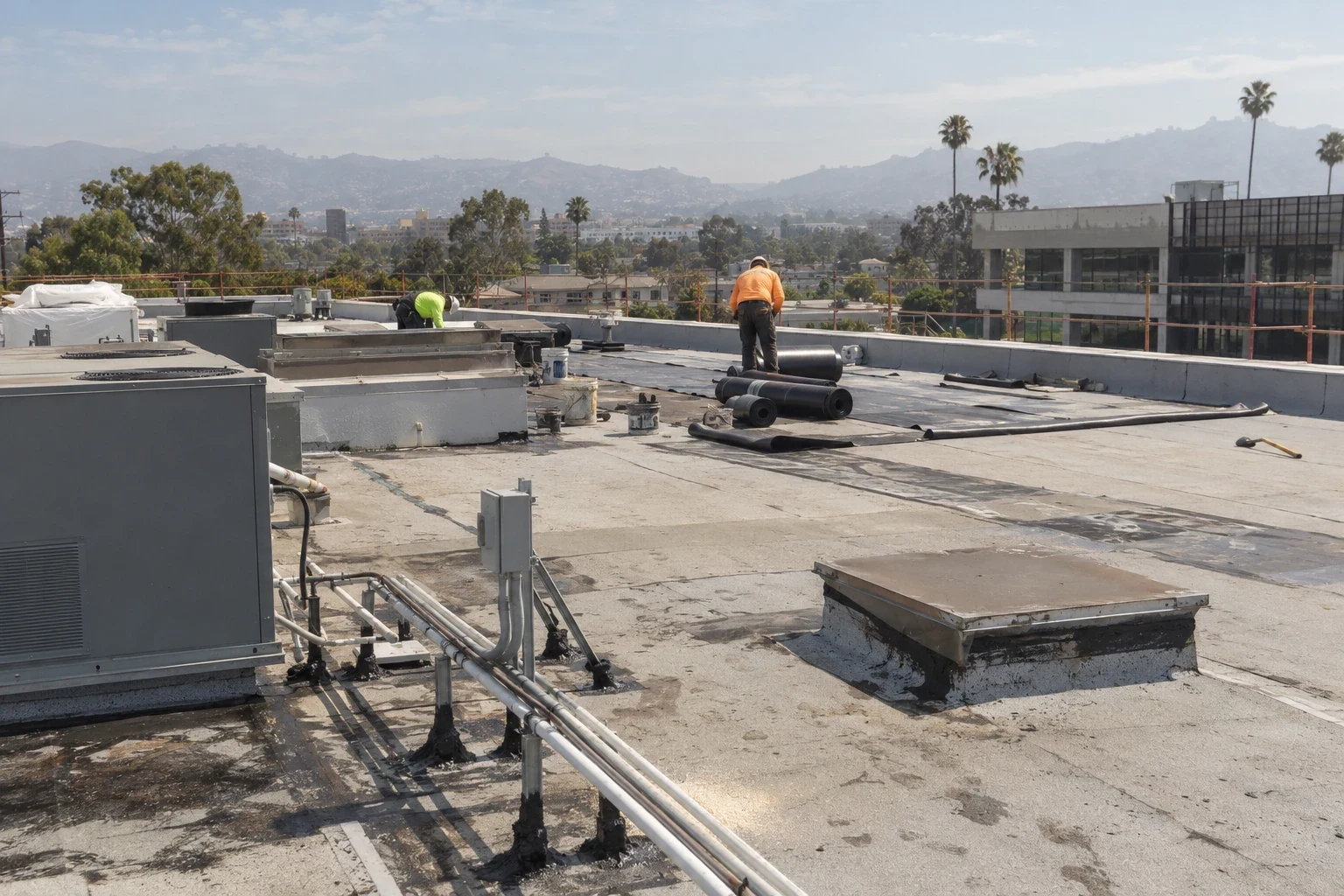

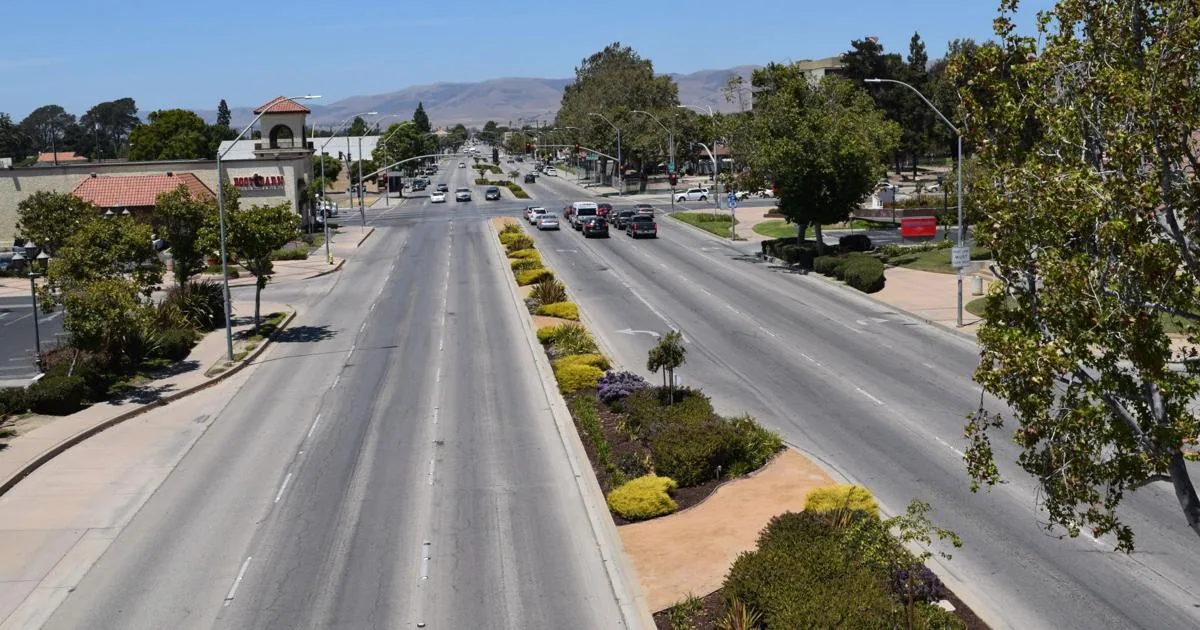
A roof tie-in at a new curb can decide whether a general contractor's schedule holds through the next inspection. In Santa Maria, CA, we check the existing membrane, termination, substrate, and adjacent trade work before defining our portion of the scope. The Santa Maria Airport Business Park Specific Plan includes light-industrial, research, manufacturing, airport-service, and public uses. Within the Area 9 Industrial and Commercial Plan Area, planning calls for light or general manufacturing, warehouses, equipment service, and agricultural processing. Those areas have different project contexts, and each roof needs a field review.
For a GC, the useful roofing package shows the repair boundary, material preparation, staging route, daily dry-in, and inspection hold in the same sequence as related trades. We identify what must be completed before the roofing crew arrives and what needs to remain accessible afterward. A curb and equipment transition scope can state how the roofing detail ties into supports, penetrations, and the trade responsible for setting equipment.
Inspection: establish the tie-in before pricing
At the work area, we inspect existing laps, edge metal, wall turns, drains, and the substrate that will receive the new detail. A drawing may show a curb but not the condition of the membrane beneath it. We photograph accessible conditions, identify the tie-in limit, and note any test opening needed to confirm attachment or wet insulation. We also check whether the plan set accounts for overflow routes, existing equipment bases, and roof access from the approved staging area. If those details differ in the field, the GC receives the location and the condition that affects the roofing sequence before installation proceeds. A roof inspection can establish what is ready for bid and which concealed condition needs an allowance or a separate authorization.
Santa Maria's KSMX station records 13.32 inches as its 1991-2020 annual precipitation normal. At the roof, we check drains and overflow paths and identify ponding that may affect the tie-in. Santa Maria's drainage rule applies when broad ponding remains on the roof two days after rainfall; analysis and corrective work are then required. That may change the order of outlet work, substrate repair, and new-cover installation.
Repair options: define each trade boundary
Roofing scope should make the trade interface clear. We state whether curb fabrication, equipment setting, electrical disconnects, temporary removal, interior protection, and final flashing are included or assigned elsewhere. If other work disturbs a completed membrane, the package identifies the protection and restoration detail needed before the roof is released. A TPO tie-in detail or another system needs the existing membrane and substrate to be confirmed before the crew commits to a weld, bond, or cover board transition.
When water is entering, crews can respond around the clock, holidays included. We can limit the intrusion and record temporary protection while the GC coordinates access and the trade affected below. Permanent work begins after the surface, substrate, and repair boundary are established. If the project requires broader removal, we identify the dry-in limit for each shift so the GC can sequence interior work without leaving an open roof above finished space.
Timing: set hold points and inspection access
Before a replacement covering goes down, the City requires a building permit, a pre-roof inspection, and written clearance. Review may examine the support, deck, water path, existing attachment, damp insulation, and fire-retardant measures. We identify the roof access and records needed for that hold before the schedule is baselined. The GC can then sequence tear-off, inspection access, material delivery, and installation around the approval instead of treating it as a same-day closeout step.
Fog can affect when washing, bonding, or coating preparation can proceed. KSMX's 42-year record yields a yearly average of 62.4 heavy-fog days. We inspect the surface and substrate before washing, bonding, or coating, then adjust the work window to the selected system's readiness requirements. A coating scope has preparation and cure periods, while an occupied project may need a phased sequence that secures each area before the next trade enters.
Building context: coordinate access with the site
At a multi-building project, material staging and roof access may compete with deliveries, equipment lifts, and public routes. We ask who controls gate access, crane or hoist windows, roof keys, and protection below the work. West Main planning materials place urban activity toward the area's eastern side and agriculture to the west, with commercial and industrial development planned between them. Those land-use notes say nothing about a contractor's gate or laydown area, so we verify both on site.
The Airport Business Park plan includes airport-service, manufacturing, research, and office uses, while Area 9 plans for light and general manufacturing, warehouses, and equipment repair. Those are distinct places, each with its own project conditions. We coordinate the roof detail with manufacturing teams when production access affects staging, and with public facility teams when entrances or review holds shape the work window. A roof walk in Area 9 can identify tie-ins and logistics before the GC finalizes the sequence.
Maintenance: close the roof record with the project
At closeout, we provide photographs of the completed tie-ins, repair limits, materials used, drain conditions, and any item left for follow-up. We record temporary protection removed, equipment penetrations restored, and the roof zones inspected. A condition report gives the owner a map that can travel with the GC's closeout package and the building's maintenance file. If another trade needs future roof access, the record can also show which path or detail needs protection.
When the building remains occupied, the closeout should identify any room or route that was protected during the work and when it was returned to service. We list the inspection hold completed, the areas not opened, and any test recommendation that remains. A property owner can then use the same evidence in a portfolio maintenance record after construction ends. That keeps the project scope and the next operating decision connected without assuming the building needs no further review. We also identify who can accept an inspection hold and whether an open detail can remain protected while a response is pending.
Commercial Roofing Questions
What should a roofing subcontract scope include for a GC?
Include the roof zones, tie-in details, material preparation, staging, protection below, daily dry-in, permit and inspection holds, and trade interfaces. We state what is included and what must be complete before the roofing crew begins. That gives the GC a sequence the other trades can coordinate against.
How do you handle a curb set by another trade?
We confirm the curb location and substrate before roofing work, then identify who provides blocking, support, counterflashing, and final membrane connection. The scope records when the equipment trade can return and what protection is required across the finished detail. If the existing opening differs from the drawing, we document it before extending the tie-in.
What can delay a Santa Maria reroof schedule?
Permit review, pre-roof inspection approval, wet insulation, deck or attachment findings, drainage corrections, surface conditions, and site access can change the sequence. We identify those holds early and note the decision or record each one needs. A dry-in boundary is planned for each work period so the structure can be secured while a hold is resolved.
What should the GC receive at roof closeout?
Keep close photographs, a marked roof map, materials used, completed tie-ins, drain observations, inspection records, and open items. We identify areas that were not opened or could not be accessed. The owner can then use the same file for maintenance and future equipment work.
Plan the next roof visit
Tell us about the building and what you are seeing on the roof. Request a roof assessment and we will set up a time to look at it.